

Operation Process and Working Principle of Polypropylene Material Pneumatic Conveying Lines
HeadPowder, a leading engineering company based in Shandong, China, specializes in the design, manufacturing, and installation of advanced pneumatic conveying systems for various industrial applications. Among their core offerings is the polypropylene material pneumatic conveying line, a sophisticated solution engineered to efficiently transport polypropylene pellets or powders over long distances with minimal product degradation.
Key Components of the Pneumatic Conveying System
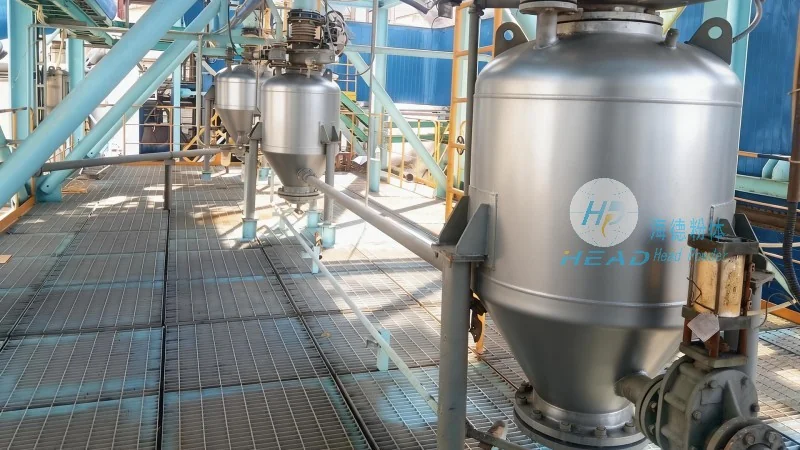
The polypropylene pneumatic conveying line typically consists of several critical components that work in tandem to ensure smooth and reliable operation. These include the material hopper, which serves as the storage and feeding unit, equipped with a rotary valve or feeder to control the flow rate of the polypropylene material. The conveying line itself, often a pipeline system, may be either positive pressure or negative pressure (or a combination of both) depending on the specific application requirements. A key component is the air compressor or vacuum pump, which generates the necessary air pressure or vacuum to move the material through the pipeline. Additionally, the system may incorporate filters and cyclones to separate the conveyed material from the air, ensuring clean air discharge and preventing material loss. The receiving hopper or silo at the end of the line collects the material, completing the conveying process.

Working Principle of the Pneumatic Conveying Process
The operation of the polypropylene pneumatic conveying line is based on the principle of air movement to transport solid materials. In a positive pressure system, the air compressor generates high-pressure air that is introduced into the material hopper. The air then lifts and carries the polypropylene pellets or powder through the pipeline to the receiving hopper. The air velocity within the pipeline is maintained at a level sufficient to overcome the gravitational force and frictional resistance of the material particles, ensuring stable and continuous flow. In a negative pressure system, a vacuum pump creates a low-pressure environment at the receiving end, drawing the material and air through the pipeline from the source. The air acts as a carrier, suspending the polypropylene particles and transporting them to the destination. The system is designed to maintain consistent air flow and pressure, which is crucial for preventing material blockages and ensuring efficient conveying.
Operation Process of the Polypropylene Pneumatic Conveying Line
The operation process of the polypropylene pneumatic conveying line involves several sequential steps that ensure the smooth transfer of material from the source to the destination. First, the polypropylene material is loaded into the material hopper. The rotary valve or feeder then regulates the flow rate, controlling the amount of material released into the pipeline. The air compressor or vacuum pump is activated, generating the necessary pressure or vacuum. The air is introduced into the hopper, lifting the material and creating a slurry of air and particles. The mixture travels through the pipeline at a controlled velocity, reaching the receiving hopper. The air and material are separated in the cyclone or filter, with the air being discharged and the polypropylene material collected in the receiving hopper. The system may include monitoring and control devices to adjust the flow rate, pressure, and air volume as needed, ensuring optimal performance and preventing issues such as overloading or blockages. Regular maintenance, including cleaning of filters and checking for wear on components, is essential to maintain the efficiency and longevity of the system.

Advantages of Using Polypropylene Pneumatic Conveying Lines
Implementing a polypropylene pneumatic conveying line offers several advantages for industrial operations. One of the primary benefits is the ability to transport polypropylene material over long distances without the need for intermediate storage or manual handling, reducing labor costs and improving operational efficiency. The system also minimizes product contamination and degradation, as the material is enclosed within the pipeline and protected from external factors such as moisture, dust, or temperature fluctuations. Additionally, the system is flexible and can be easily integrated with existing production lines, allowing for seamless material transfer between processes. The use of pneumatic conveying also reduces the risk of material spillage and dust emissions, contributing to a safer and more environmentally friendly operation. Overall, the polypropylene pneumatic conveying line provides a reliable and efficient solution for handling polypropylene materials in various industrial applications.