

Operation Process and Working Principle of Mineral Sand Material Pneumatic Conveying Lines
Mineral sand material pneumatic conveying lines are advanced industrial equipment designed to transport bulk materials like mineral sands, powders, and granules through a pipeline system using air pressure or vacuum. These systems are widely used in mining, chemical, and food processing industries due to their efficiency, flexibility, and ability to handle various material characteristics. The core of such systems lies in the seamless integration of components that ensure reliable material transport from the source to the destination.

Key Components and Their Roles
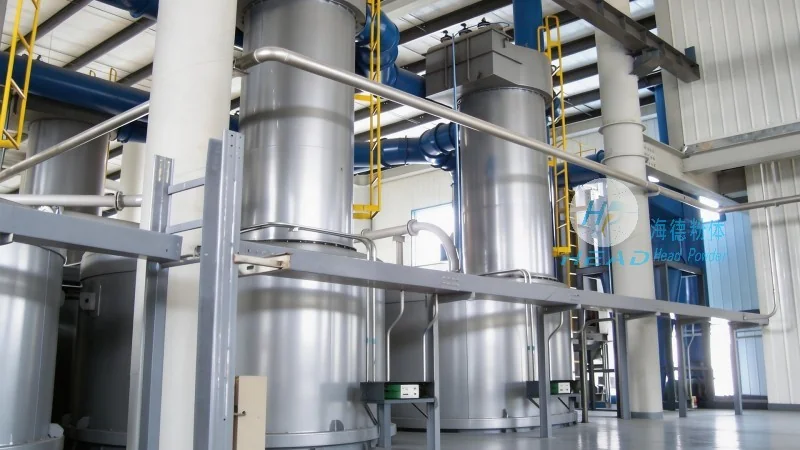
The operation of a mineral sand material pneumatic conveying line involves several critical components, each playing a vital role in the overall process. These include the material feed hopper, which stores and feeds the mineral sand into the system; the air compressor or vacuum pump, which generates the necessary air pressure or vacuum to move the material; the conveying pipeline, which transports the material and air mixture; and the control system, which monitors and regulates the flow and pressure. Additionally, components like filters, cyclones, and dust collectors are often integrated to ensure clean air and material separation.
Operation Process of the Pneumatic Conveying Line
The operation process of a mineral sand material pneumatic conveying line typically follows a sequence of steps to ensure efficient material transport. First, the mineral sand is loaded into the feed hopper from the source. The control system then activates the air compressor, which generates a flow of air into the pipeline. Simultaneously, the material is released from the hopper into the air stream, creating a mixture of sand and air. This mixture is then propelled through the pipeline to the destination point, such as a storage silo or processing unit. At the receiving end, the air and material are separated using cyclones or filters, and the mineral sand is collected while the air is either recirculated or vented. The entire process is controlled by sensors and valves that adjust the air flow and material feed rate to maintain optimal performance.

Working Principle of the System
The working principle of a mineral sand material pneumatic conveying line is based on the principles of fluid dynamics and particle transport. The system utilizes either positive pressure (pressure conveying) or negative pressure (vacuum conveying) to move the material. In positive pressure systems, the air compressor pushes air through the pipeline, creating a pressure differential that propels the material. In vacuum systems, a vacuum pump creates a low-pressure environment that draws the material and air mixture into the pipeline. The velocity of the air stream is crucial, as it must be sufficient to overcome the gravitational force and frictional resistance of the material particles. The design of the pipeline, including its diameter and length, is carefully calculated to ensure that the air velocity remains within the optimal range for efficient material transport, typically between 20-30 meters per second for fine powders and up to 50 meters per second for larger particles.
Advantages of Using Pneumatic Conveying for Mineral Sands
There are several advantages to using pneumatic conveying systems for mineral sand materials. Firstly, these systems offer high efficiency in material transport, as they can move large quantities of material over long distances with minimal labor. Secondly, they provide a closed system that prevents contamination from external sources and reduces dust emissions, which is crucial for maintaining environmental standards and worker safety. Thirdly, pneumatic conveying systems are flexible and can be easily adapted to different material types and processing requirements. They can handle a wide range of particle sizes and moisture contents, making them suitable for various applications in the mining and processing industries. Additionally, these systems are relatively compact and can be installed in confined spaces, reducing the overall footprint of the processing facility.

Application Examples in the Mining Industry
In the mining industry, mineral sand material pneumatic conveying lines are commonly used for transporting ore, sand, and other bulk materials from mining sites to processing plants or storage facilities. For example, in a sand mining operation, the system can transport sand from the excavation site to a washing and screening plant, where it is cleaned and processed into usable products. Similarly, in a mineral processing plant, the system can convey crushed ore to a grinding mill or a flotation unit, where further processing occurs. The flexibility of pneumatic conveying allows these systems to be integrated into existing mining operations, enhancing overall productivity and efficiency.
Company Profile: Shandong HeadPowder Engineering Co., Ltd.
Shandong HeadPowder Engineering Co., Ltd., operating under the brand name headpowder, is a leading manufacturer and supplier of pneumatic conveying systems for mineral sand and other bulk materials. With a strong presence in China, the company specializes in designing, manufacturing, and installing customized pneumatic conveying lines tailored to the specific needs of its clients. The company's headquarters is located in Shandong, China, where it has a team of experienced engineers and technicians dedicated to developing innovative solutions for material handling challenges. headpowder's commitment to quality and customer satisfaction has made it a trusted partner for many mining and processing companies worldwide.