

Operation Process and Working Principle of Pneumatic Conveying for Calcium Carbonate Powder Material
HeadPowder, a leading engineering company based in Shandong, China, specializes in the design, installation, and maintenance of advanced pneumatic conveying systems tailored for calcium carbonate powder materials. This article delves into the operational process and underlying principles of such systems, providing a comprehensive understanding of how these technologies efficiently transport fine powders like calcium carbonate.

Understanding Pneumatic Conveying Technology
Pneumatic conveying is a method of transporting bulk materials, including powders and granules, using a gas stream, typically air or a combination of air and other gases. In the context of calcium carbonate powder, this technology offers a non-contact, low-maintenance, and highly efficient solution for moving materials from one location to another within industrial settings. The core principle involves creating a pressure differential or using suction to move the powder through a pipeline, ensuring minimal product degradation and consistent flow rates.
The Operational Process of Calcium Carbonate Powder Pneumatic Conveying
The operation of a calcium carbonate powder pneumatic conveying system involves several key stages, each critical to ensuring reliable and efficient material transport. The process typically begins with the feeding stage, where the calcium carbonate powder is introduced into the system, often through a hopper or feeder that controls the flow rate. This stage is crucial for maintaining a consistent feed, preventing blockages, and ensuring the material is properly introduced into the conveying line.
Following the feeding stage is the conveying stage, where the powder is transported through the pipeline. Depending on the system design, this can be achieved through either pressure or vacuum methods. In pressure systems, a positive pressure is applied to the material, pushing it through the pipeline, while vacuum systems use suction to draw the material from the source. For calcium carbonate powders, which are fine and have a relatively low density, pressure systems are commonly preferred due to their ability to handle high volumes and maintain consistent flow rates, minimizing the risk of material degradation or clogging.
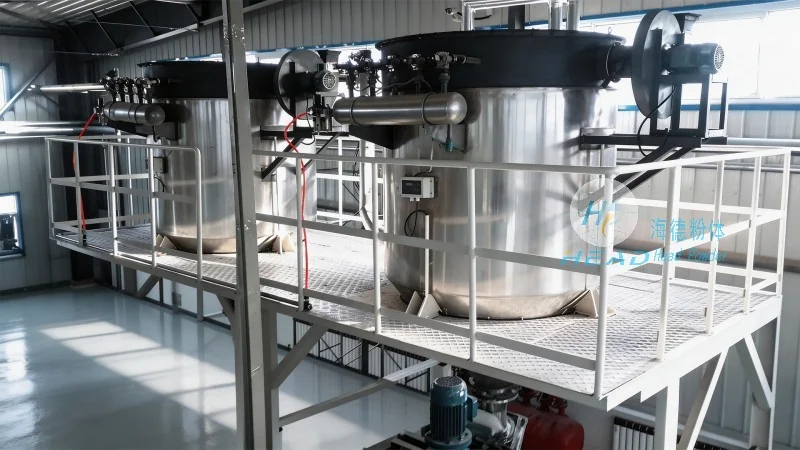
The third stage is the discharge stage, where the calcium carbonate powder is released from the conveying line into the destination vessel or processing equipment. This stage requires careful design to ensure smooth and controlled discharge, preventing dust emissions and ensuring the material is deposited accurately. Properly designed discharge nozzles and silos are essential to maintain the integrity of the powder and prevent agglomeration or segregation.
Finally, the cleaning and maintenance stage is integral to the long-term operation of the system. Regular maintenance, including pipeline cleaning and filter replacement, is necessary to prevent material buildup and ensure the system continues to operate efficiently. HeadPowder emphasizes the importance of routine maintenance to extend the lifespan of the equipment and maintain product quality.
Key Working Principles in Pneumatic Conveying
The effectiveness of a calcium carbonate powder pneumatic conveying system relies on several fundamental principles. The first is the velocity of the gas stream, which must be sufficient to entrain the powder particles and maintain them in suspension. The velocity is typically calculated based on the particle size, density, and flow rate of the material. For calcium carbonate powders, which are fine and have a relatively low density, a moderate gas velocity is often sufficient to ensure stable conveying.

Another critical principle is the pressure differential or vacuum level in the system. The pressure difference between the source and destination determines the flow rate and the distance over which the material can be conveyed. Higher pressure differentials allow for longer conveying distances and higher flow rates, making them suitable for large-scale industrial applications. HeadPowder’s engineering expertise ensures that the pressure differentials are optimized for each specific application, balancing efficiency with cost-effectiveness.
The pipeline design also plays a vital role in the system’s performance. The diameter and length of the pipeline, along with the number of bends and fittings, directly impact the pressure drop and overall efficiency of the conveying process. Properly sized pipelines minimize energy consumption and prevent excessive pressure losses, which can lead to material degradation or system failure. HeadPowder’s engineers use advanced computational fluid dynamics (CFD) tools to model and optimize pipeline designs, ensuring the most efficient and reliable system for calcium carbonate powder transport.
Furthermore, the material properties of calcium carbonate powder influence the design and operation of the pneumatic conveying system. The powder’s particle size distribution, moisture content, and flowability are key factors that affect the system’s performance. For example, fine calcium carbonate powders may require higher gas velocities to maintain suspension, while coarser powders may be conveyed more efficiently at lower velocities. HeadPowder’s engineers conduct thorough material analysis to tailor the system design to the specific characteristics of the calcium carbonate powder, ensuring optimal performance and minimal operational issues.