

Operation Process and Working Principle of Cement Raw Material Powder Pneumatic Conveying Machine
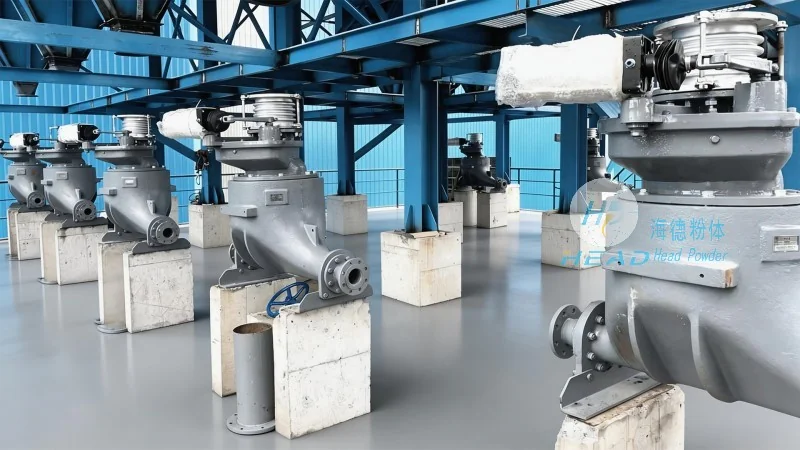
Shandong HeadPowder Engineering Co., Ltd. specializes in the design, manufacturing, and supply of advanced pneumatic conveying systems tailored for the cement industry. The cement raw material powder pneumatic conveying machine is a critical piece of equipment used to transport bulk powders, such as raw meal, limestone, and other raw materials, efficiently and reliably within cement production lines. This equipment plays a vital role in optimizing the material handling process, enhancing production efficiency, and ensuring consistent quality in cement manufacturing.

Key Components and Structure of the Pneumatic Conveying System
The cement raw material powder pneumatic conveying machine typically consists of several key components that work in tandem to facilitate the transport of powders. These components include the hopper for material storage, the air compressor or blower to generate the necessary air pressure, the conveying pipeline system, and the control system for regulating the flow and pressure. The hopper is designed to hold the raw materials and feed them into the system, while the air compressor provides the motive force to move the powders through the pipeline. The conveying pipeline is usually made of stainless steel or other corrosion-resistant materials to withstand the abrasive nature of cement raw materials. The control system ensures precise operation, allowing operators to adjust the conveying rate and pressure as needed to maintain optimal performance.

Operation Process of the Pneumatic Conveying Machine
The operation of the cement raw material powder pneumatic conveying machine involves several sequential steps. First, the raw materials are loaded into the hopper. The control system then activates the air compressor, which generates a flow of air through the conveying pipeline. As the air flows, it creates a low-pressure zone that draws the raw material powder from the hopper into the pipeline. The powder is then carried along the pipeline by the air stream, moving from the feeding point to the discharge point. The speed and pressure of the air are carefully controlled to ensure that the powder is conveyed smoothly without clogging or degradation. At the discharge end, the air and powder mixture is separated, typically using a cyclone separator or a filter, to collect the powder and return the air to the system for reuse. This closed-loop system minimizes material loss and energy consumption, making it an efficient solution for bulk material transport.
Working Principle of the Pneumatic Conveying System
The working principle of the cement raw material powder pneumatic conveying machine is based on the fundamental concept of pneumatic transport, where powders are moved by the force of compressed air. The system operates on the principle of creating a pressure differential between the inlet and outlet of the conveying pipeline. The air compressor supplies high-pressure air to the inlet of the pipeline, while the outlet is maintained at a lower pressure (often atmospheric or slightly negative pressure). This pressure difference causes the air to flow through the pipeline, carrying the powder particles along with it. The velocity of the air is crucial; it must be sufficient to overcome the gravitational force and frictional resistance of the powder particles, ensuring that the powder remains suspended and transported efficiently. The design of the system, including the size of the pipeline, the air velocity, and the material properties of the powder, all contribute to the overall efficiency and effectiveness of the conveying process. By optimizing these parameters, the system can achieve high conveying rates with minimal energy input and material degradation.
Advantages and Applications in Cement Production
The cement raw material powder pneumatic conveying machine offers several advantages over traditional material handling methods, such as belt conveyors or bucket elevators. These advantages include high conveying capacity, the ability to transport materials over long distances, and the flexibility to handle different types of powders. The system is particularly suitable for transporting raw meal, limestone, and other fine powders that are prone to dust and clogging in traditional systems. In cement production, this equipment is used to move raw materials from storage silos to the kiln or other processing units, ensuring a continuous and uninterrupted supply of materials. The closed-loop design also helps in controlling dust emissions, contributing to a cleaner and more environmentally friendly production environment. Additionally, the system can be integrated with other automation systems, allowing for real-time monitoring and control, which enhances overall operational efficiency and reduces downtime.