

Operation Process and Working Principle of Lanthanum Carbon Powder Conveying Line
Shandong HeadPowder Engineering Co., Ltd., based in Shandong, China, specializes in the design, manufacturing, and installation of advanced powder conveying systems, including the Lanthanum Carbon Powder Conveying Line. This article provides a detailed overview of the operation process and working principle of such systems, highlighting key components, operational steps, and the technical foundation that enables efficient powder handling in industrial applications.

Overview of the Lanthanum Carbon Powder Conveying Line
The Lanthanum Carbon Powder Conveying Line is a sophisticated system engineered to transport fine powders, such as Lanthanum Carbon, with precision and reliability. Developed by Shandong HeadPowder Engineering Co., Ltd., this line integrates multiple components to ensure seamless material movement from the source to the destination, minimizing loss and optimizing process efficiency. The system is tailored to meet the demands of various industrial sectors, including chemical, metallurgy, and energy production, where handling fine powders is critical for production continuity.
Key Components and Their Functions
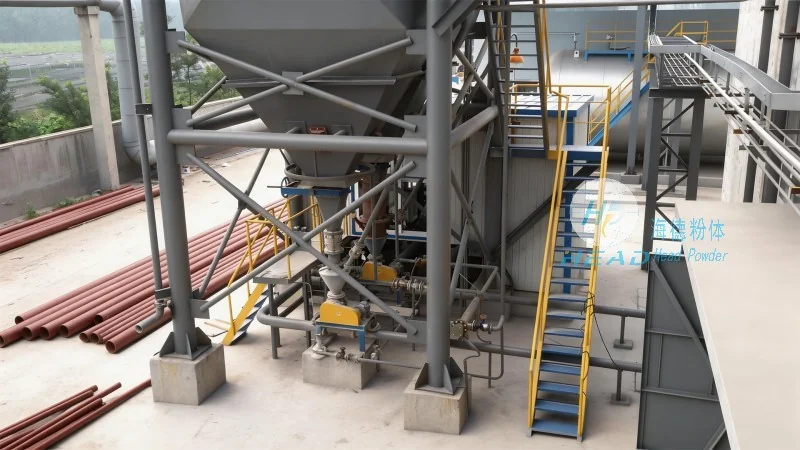
The Lanthanum Carbon Powder Conveying Line comprises several core components, each playing a vital role in the overall operation. The primary components include the material hopper, which serves as the storage and feeding unit; the conveyor system, responsible for transporting the powder; the dust collection and separation system, designed to maintain air quality and prevent contamination; and the control panel, which manages the entire process through automated or manual controls. Each component is carefully selected and integrated to ensure compatibility with the specific characteristics of Lanthanum Carbon powder, such as its fine particle size and potential for static charge accumulation.
Operation Process: Step-by-Step Guide
The operation of the Lanthanum Carbon Powder Conveying Line follows a systematic sequence of steps to ensure consistent and efficient material handling. The process begins with the loading of Lanthanum Carbon powder into the material hopper. A feeder, typically a rotary valve or a screw feeder, then regulates the flow of powder from the hopper into the conveyor system. The conveyor, which may consist of a belt or a pneumatic pipeline, transports the powder to the desired destination, such as a processing unit or a storage silo. During transport, the system incorporates dust collection mechanisms, such as cyclones or bag filters, to capture any airborne particles and maintain a clean working environment. The control panel monitors the entire process, adjusting feeder speed, conveyor speed, and dust collection efficiency as needed to maintain optimal performance. The final step involves the discharge of the powder into the receiving container, completing the cycle.

Working Principle: How the System Operates
The working principle of the Lanthanum Carbon Powder Conveying Line is based on the principles of fluidization and pneumatic transport, depending on the specific design. For systems using pneumatic transport, the powder is suspended in a stream of air and carried through the pipeline. The air flow is controlled to maintain the powder in a suspended state, preventing clogging and ensuring smooth transport. The system may also incorporate static elimination devices, such as ionizers or anti-static coatings, to address the issue of static charge buildup, which can affect powder flow and cause material loss. The separation system works by using centrifugal force to separate the powder from the air stream, allowing the powder to be collected in a hopper while the air is filtered and recirculated. This closed-loop system minimizes material waste and environmental impact, aligning with modern industrial standards for sustainability and efficiency.

Advantages and Applications
The Lanthanum Carbon Powder Conveying Line offers several advantages that make it an ideal solution for handling fine powders. Its ability to transport materials over long distances with minimal loss, combined with the integrated dust collection system, ensures a clean and safe working environment. The system's adaptability allows it to be customized for various particle sizes and flow rates, making it suitable for a wide range of industrial applications. Common applications include the transport of Lanthanum Carbon powder in chemical plants for production of rare earth compounds, in metallurgical facilities for alloy manufacturing, and in energy sectors for fuel processing. The system's reliability and efficiency contribute to improved production throughput and reduced operational costs, making it a valuable asset for any industrial operation.
Conclusion and Company Commitment
Shandong HeadPowder Engineering Co., Ltd. is committed to providing high-quality powder conveying solutions, including the Lanthanum Carbon Powder Conveying Line, that meet the evolving needs of industrial clients. By leveraging advanced technology and engineering expertise, the company ensures that its systems are designed to deliver optimal performance, reliability, and sustainability. The operation process and working principle of the Lanthanum Carbon Powder Conveying Line exemplify the company's dedication to innovation and customer satisfaction. With a focus on precision, efficiency, and safety, Shandong HeadPowder Engineering Co., Ltd. continues to be a leader in the powder handling industry, serving clients across China and beyond with tailored solutions that enhance operational productivity and environmental compliance.