

Operation Process and Working Principle of Sponge Sand Pneumatic Conveying System Equipment
Understanding the operation process and working principle of the sponge sand pneumatic conveying system equipment is crucial for optimizing material handling efficiency in industrial applications. This system, developed by Shandong HeadPowder Engineering Co., Ltd., is designed to efficiently transport sponge sand through an air-driven mechanism, ensuring reliable and low-maintenance material transfer.

Overview of the Sponge Sand Pneumatic Conveying System
The sponge sand pneumatic conveying system is a specialized equipment used in various industrial sectors, including construction, mining, and manufacturing. It operates by utilizing compressed air to move granular materials like sponge sand through a pipeline network. The system is engineered to handle abrasive and lightweight materials, making it ideal for applications where traditional mechanical conveyors may be less effective or efficient.
Key Components and Their Functions
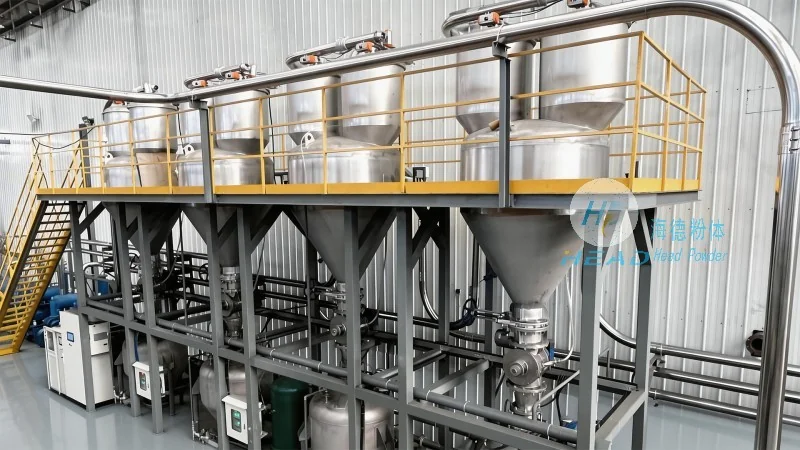
The system comprises several critical components that work in tandem to ensure smooth operation. These include the air compressor, which generates the necessary pressure for material transport; the hopper, where the sponge sand is loaded; the conveying line, which transports the material; and the receiver, where the material is deposited. Each component plays a vital role in the overall functionality of the system.

Working Principle of the Pneumatic Conveying Process
The operation begins with the loading of sponge sand into the hopper. The air compressor then starts, creating a high-pressure air stream that draws the sand particles into the conveying line. As the air flows through the pipeline, it entrains the sand, forming a dense mixture known as a "slurry" or "pneumatic stream." This mixture travels through the system under pressure, reaching the receiver where the air is released and the sand is deposited. The system's design ensures minimal material loss and consistent flow rates, even with varying material properties.

Operation Process: Step-by-Step Execution
The operation of the sponge sand pneumatic conveying system follows a systematic process. First, the hopper is filled with the required amount of sponge sand. Next, the air compressor is activated, and the system is primed to ensure proper air flow. Once the system is ready, the material is released from the hopper into the conveying line. The compressed air then propels the sand through the pipeline, maintaining a steady flow. At the receiving end, the air is vented, and the sand is collected in the receiver. The system may also include control mechanisms to regulate air pressure and flow rate, ensuring optimal performance under different operating conditions.
Advantages and Applications
Shandong HeadPowder Engineering Co., Ltd.'s sponge sand pneumatic conveying system offers several advantages over traditional conveying methods. These include reduced labor costs, minimal material degradation, and the ability to transport materials over long distances without the need for multiple transfer points. The system is particularly suitable for applications involving abrasive or lightweight materials, where traditional belt or screw conveyors may cause wear or inefficiencies. Industries such as construction, where sponge sand is used in concrete production, and mining, where it is used for sandblasting or filtration, benefit significantly from this technology.
Maintenance and Operational Considerations
To ensure the longevity and efficiency of the sponge sand pneumatic conveying system, regular maintenance is essential. This includes checking the air compressor for proper pressure and airflow, inspecting the conveying line for blockages or wear, and cleaning the hopper and receiver to prevent material buildup. The system's design incorporates features that simplify maintenance, such as easy access to components and self-cleaning mechanisms. Proper operational considerations, such as monitoring air pressure and flow rates, help prevent system failures and ensure consistent performance over time.