

Operation Process and Working Principle of High-Alumina Fly Ash Pneumatic Conveying Machine
High-alumina fly ash, a byproduct of coal combustion, is widely utilized in industrial applications such as cement production, concrete manufacturing, and refractory material fabrication. The efficient handling and transportation of this material are pivotal for optimizing production workflows and maintaining consistent product quality. Pneumatic conveying systems, particularly those engineered for high-alumina fly ash, offer a reliable solution to meet these demands. This article provides an in-depth exploration of the operation process and working principle of a high-alumina fly ash pneumatic conveying machine, highlighting its core components, operational steps, and technical advantages.

Company Overview: Shandong HeadPowder Engineering Co., Ltd.
HeadPowder, a leading manufacturer in the material handling equipment sector, specializes in the design, development, and production of advanced pneumatic conveying systems. With a strong commitment to innovation and quality, the company has established itself as a trusted partner for industries dealing with bulk materials. HeadPowder's products are engineered to deliver high performance, durability, and energy efficiency, catering to the diverse needs of clients globally. The company's headquarters is located in Shandong, China, where it leverages local expertise and resources to support its global operations.
Key Components of the High-Alumina Fly Ash Pneumatic Conveying System
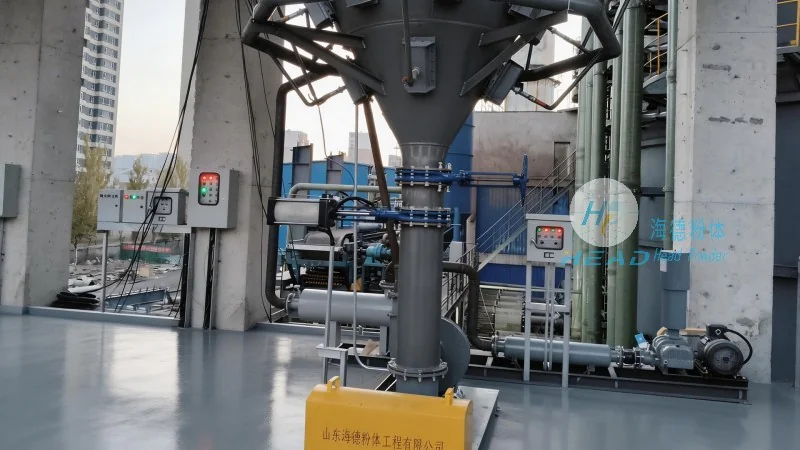
The high-alumina fly ash pneumatic conveying machine comprises several critical components that function in unison to ensure smooth material transport. These components include the hopper, which serves as the material storage and feeding unit; the air compressor, responsible for generating the necessary air pressure; the conveying pipeline, which transports the material; and the control system, which monitors and regulates the entire process. Each component is meticulously designed to handle the specific characteristics of high-alumina fly ash, such as its particle size, density, and moisture content, ensuring optimal performance and minimal downtime.

Operation Process of the High-Alumina Fly Ash Pneumatic Conveying Machine
The operation of the high-alumina fly ash pneumatic conveying machine follows a systematic sequence of steps. Initially, the high-alumina fly ash is fed into the hopper from the storage silo. The material is then discharged into the conveying pipeline via a rotary valve or a feeder, depending on the system design. Concurrently, the air compressor generates high-pressure air, which is introduced into the pipeline. The air and material mixture travels through the pipeline under the pressure of the air flow, reaching the discharge point. At the discharge end, the material is separated from the air using a cyclone separator or a filter, and the clean air is then released back into the environment. The entire process is controlled by the system's control panel, which adjusts the air pressure, feeding rate, and other parameters to maintain consistent material flow and prevent blockages.
Working Principle of the High-Alumina Fly Ash Pneumatic Conveying Machine
The working principle of the high-alumina fly ash pneumatic conveying machine is grounded in fluid dynamics and particle transport. The system operates by creating a pressure differential between the inlet and outlet of the conveying pipeline. The air compressor provides the necessary pressure to overcome the resistance of the material particles and the pipeline, allowing them to move through the system. The material particles are suspended in the air stream, which acts as a carrier, transporting them from the source to the destination. The velocity of the air flow is critical, as it must be sufficient to keep the particles in suspension and prevent them from settling or clogging the pipeline. The control system continuously monitors the pressure, flow rate, and other parameters to ensure the system operates within optimal conditions, minimizing energy consumption and maximizing material throughput.

Advantages of Using High-Alumina Fly Ash Pneumatic Conveying Equipment
High-alumina fly ash pneumatic conveying equipment offers several advantages over traditional material handling methods like belt conveyors or bucket elevators. One primary benefit is the ability to handle high-volume material transport with minimal space requirements. The system is also highly flexible, as it can be easily integrated into existing production lines and adapted to different material characteristics. Additionally, pneumatic conveying systems are less prone to material contamination and can handle materials with varying moisture content and particle sizes. The equipment is also designed for low maintenance, with components that are easy to access and replace, reducing downtime and operational costs. Furthermore, the system is energy-efficient, as it uses compressed air to transport the material, which can be generated from the plant's existing air supply, reducing additional energy consumption.
Conclusion
High-alumina fly ash pneumatic conveying machines are essential equipment for industries dealing with bulk materials, providing an efficient and reliable solution for material handling and transportation. The operation process and working principle of these machines are carefully designed to ensure optimal performance, durability, and energy efficiency. With the support of leading manufacturers like Shandong HeadPowder Engineering Co., Ltd., industries can leverage advanced pneumatic conveying technology to enhance their production processes and improve overall operational efficiency. By understanding the key components, operation steps, and technical advantages of high-alumina fly ash pneumatic conveying equipment, businesses can make informed decisions to optimize their material handling strategies and achieve their production goals.