

Principles and Operational Scenarios of Pneumatic Conveying for Flake Graphite Powder Materials
HeadPowder, a prominent enterprise based in Shandong, China, specializes in providing advanced pneumatic conveying solutions for flake graphite powder materials. This article explores the fundamental principles of pneumatic conveying and highlights key operational scenarios where this technology excels in handling flake graphite powder, ensuring efficient material transport and process optimization.

Understanding Pneumatic Conveying: The Core Principles
Pneumatic conveying is a method of transporting bulk materials, such as flake graphite powder, using a stream of air or gas. The process relies on the principle of fluidization, where the material is suspended and carried by the moving air. For flake graphite powder, which typically has a fine to medium particle size and specific density, the design of the conveying system—including the type of air flow (positive or negative pressure), pipeline configuration, and velocity—plays a critical role in achieving stable and efficient transport. The key to successful pneumatic conveying lies in maintaining the right balance between air velocity and material flow rate to prevent issues like clogging, particle degradation, or excessive energy consumption.
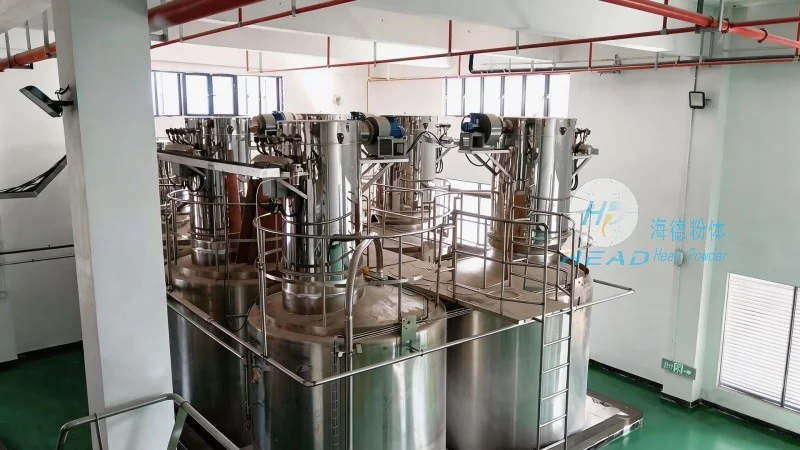
Key Operational Scenarios for Flake Graphite Powder Pneumatic Conveying
HeadPowder’s pneumatic conveying systems are engineered to address diverse operational scenarios, each with unique challenges and requirements. One common scenario involves long-distance horizontal or inclined transport, where the system must maintain consistent material flow over extended distances without significant pressure drop or loss of material integrity. Another scenario is vertical lifting, which requires specialized equipment like vertical conveyors or air lifters to handle the gravitational forces and ensure smooth upward movement of flake graphite powder. Additionally, multi-phase conveying applications, where flake graphite powder is mixed with other materials or additives, demand precise control over air and material ratios to achieve uniform blending and prevent segregation.

Advantages and Practical Applications in Industrial Settings
The application of pneumatic conveying for flake graphite powder offers several advantages that enhance industrial processes. Unlike traditional mechanical conveying methods, such as screw conveyors or belt conveyors, pneumatic systems provide a closed-loop environment, minimizing dust emissions and ensuring product purity. This is particularly important for flake graphite powder, which is often used in high-purity applications like battery anodes or lubricants. Furthermore, pneumatic conveying allows for flexible system integration, enabling seamless connection to existing production lines and facilitating easy expansion or modification as production needs evolve. In Shandong, China, Shandong HeadPowder Engineering Co., Ltd. has successfully implemented these systems in various industrial settings, from graphite processing plants to battery manufacturing facilities, demonstrating the reliability and efficiency of their solutions.