

Principle and Working Scene Characteristics of Cement Clinker Powder Pneumatic Conveying Lines
Shandong HeadPowder Engineering Co., Ltd., commonly known as HeadPowder, is a professional manufacturer and supplier specializing in pneumatic conveying systems for industrial powder handling. With a strong focus on innovation and quality, the company has established itself as a leading provider in the cement and related industries. HeadPowder's headquarters is located in Shandong, China, where the company leverages its local expertise and resources to deliver tailored solutions for clients worldwide.
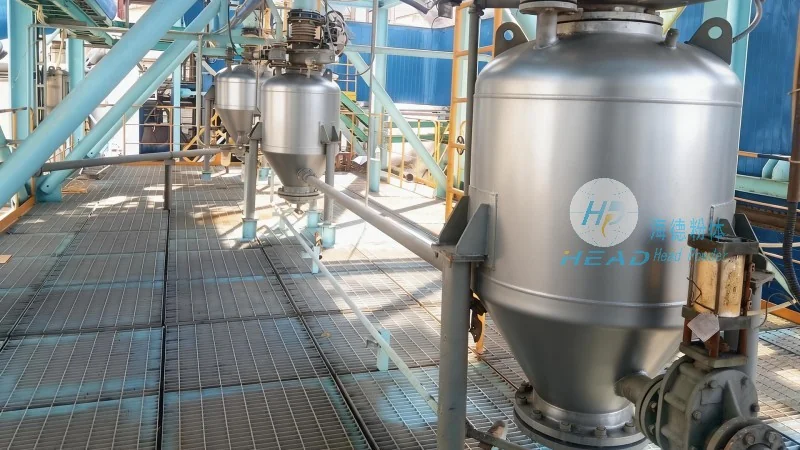
Principle of Cement Clinker Powder Pneumatic Conveying Lines
The cement clinker powder pneumatic conveying line operates on the fundamental principle of using compressed air to transport dry powder materials. This method, known as pneumatic conveying, involves the creation of a pressure differential between the conveying line and the ambient environment. By introducing high-pressure air into the system, the powder is entrained and transported through the pipeline. The system typically consists of a hopper, a rotary valve, a conveying pipeline, and a receiver. The rotary valve acts as a gate to control the flow of clinker powder from the hopper into the pipeline. As the compressed air flows through the pipeline, it lifts and propels the powder particles, ensuring efficient and continuous transport. The design of the conveying line is optimized to handle the specific characteristics of cement clinker, such as its density, particle size distribution, and moisture content. This ensures that the system operates with minimal pressure drop and maximum efficiency, reducing energy consumption and maintenance costs. The pneumatic conveying process is particularly effective for transporting clinker powder over long distances or in complex layouts, as it eliminates the need for mechanical components like belts or buckets, which are prone to wear and tear.

Working Scene Characteristics of Cement Clinker Powder Pneumatic Conveying Lines
The working scene characteristics of cement clinker powder pneumatic conveying lines are tailored to meet the demands of industrial applications. These systems are commonly used in cement production facilities, where clinker is transported from storage silos to grinding mills or other processing units. The key characteristics include high conveying capacity, which allows for the efficient movement of large volumes of clinker powder. The systems are also designed for durability and reliability, as they operate in harsh industrial environments with high temperatures and dust levels. The pneumatic conveying lines are typically equipped with advanced control systems that monitor pressure, flow rate, and temperature, ensuring optimal performance and preventing system failures. Additionally, the design of the conveying line is flexible, allowing for integration with existing infrastructure and adaptation to varying production requirements. The working scene characteristics also emphasize safety, with features such as explosion-proof designs and dust suppression systems to protect both personnel and equipment. These characteristics make the pneumatic conveying lines suitable for a wide range of applications, from small-scale operations to large-scale industrial plants.
Advantages of Cement Clinker Powder Pneumatic Conveying Lines
Implementing cement clinker powder pneumatic conveying lines offers several significant advantages for industrial operations. One of the primary benefits is the reduction in material handling costs. By eliminating the need for manual or mechanical transport methods, such as trucks or conveyor belts, the system minimizes labor and operational expenses. The pneumatic conveying process also reduces the risk of material contamination, as the powder is contained within the pipeline, preventing exposure to external elements. This is particularly important for cement clinker, which is sensitive to moisture and can degrade if not handled properly. Another advantage is the improved efficiency and productivity. The continuous and automated operation of the conveying line ensures that clinker is transported consistently, reducing downtime and increasing overall production output. The system also enhances safety by minimizing human interaction with the material, reducing the risk of accidents and injuries. Furthermore, the pneumatic conveying lines are designed for easy maintenance and repair, with modular components that can be replaced quickly, minimizing system downtime. The advantages of these systems extend to environmental benefits, as they reduce dust emissions and improve air quality in industrial settings. Overall, the cement clinker powder pneumatic conveying lines provide a cost-effective and efficient solution for handling bulk powder materials in cement production and related industries.

Technical Details of Cement Clinker Powder Pneumatic Conveying Lines
The technical specifications of cement clinker powder pneumatic conveying lines are critical to their performance and reliability. The system design is based on the specific properties of the clinker powder, including its bulk density, particle size, and moisture content. The conveying capacity is determined by the air flow rate and the diameter of the pipeline, with typical capacities ranging from several tons per hour to hundreds of tons per hour. The pressure drop across the system is a key factor, as it affects the energy consumption and the overall efficiency of the conveying process. Modern systems use high-efficiency compressors and optimized pipeline designs to minimize pressure drop and reduce energy costs. The control system plays a vital role in maintaining the stability of the conveying process. It monitors parameters such as pressure, flow rate, and temperature, and adjusts the air flow and powder feed rate accordingly. This ensures that the system operates within optimal conditions, preventing overloading or underloading. The materials used in the construction of the conveying line are selected for their durability and resistance to corrosion and wear. Stainless steel and special alloys are commonly used for the pipeline and components to withstand the harsh conditions of cement clinker handling. The system also includes safety features such as pressure relief valves and dust collection systems to protect against overpressure and dust accumulation. These technical details ensure that the cement clinker powder pneumatic conveying lines operate reliably and efficiently, meeting the demands of modern industrial applications.