

Principle and Working Scene Characteristics of Soybean Grain Pneumatic Conveying Machines
HeadPowder, a leading manufacturer based in Shandong, China, specializes in the design and production of advanced pneumatic conveying systems tailored for the agricultural sector, particularly for soybean and other grain handling operations. The company’s expertise lies in developing efficient, reliable equipment that addresses the unique challenges of bulk material transport in grain processing facilities.
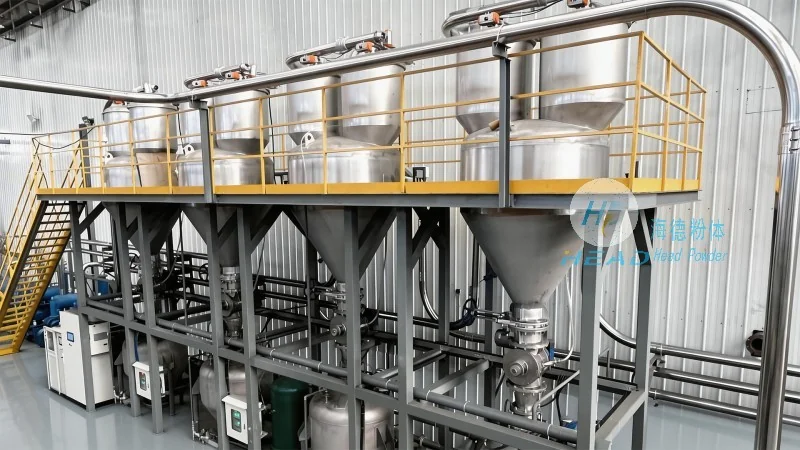
The Fundamental Principle of Pneumatic Conveying
The core principle of a soybean grain pneumatic conveying machine is the use of air pressure to move bulk materials through a pipeline system. Unlike traditional mechanical conveyors, which rely on belts or screws, pneumatic systems utilize compressed air to create a flow that propels the grain. This method is based on the Bernoulli principle, where the pressure difference between the inlet and outlet of the pipeline drives the material forward. The system typically consists of a hopper for material storage, a blower or compressor to generate the air flow, and a series of pipes with inlets and outlets. As the air is introduced into the hopper, it lifts the soybeans and carries them through the pipeline to the discharge point. This process minimizes material handling and reduces the risk of contamination, making it ideal for food-grade applications.

Key Working Scene Characteristics
The working scene characteristics of soybean grain pneumatic conveying machines are tailored to the specific demands of agricultural and food processing environments. These systems are designed to handle high volumes of grain with minimal human intervention, enhancing operational efficiency. In grain elevators and processing plants, the equipment is integrated into existing workflows to ensure seamless material transfer from storage silos to processing lines. The flexibility of pneumatic conveyors allows for vertical, horizontal, or mixed-direction transport, adapting to the layout of different facilities. Additionally, the systems are engineered to maintain consistent material flow rates, which is crucial for maintaining production line stability. Another key characteristic is the ability to handle varying grain conditions, such as wet or dry soybeans, without causing damage or segregation. This adaptability makes the machines suitable for diverse operational scenarios, from small-scale farms to large industrial processing plants.
Advantages in Practical Applications
When deployed in real-world working scenes, soybean grain pneumatic conveying machines offer several distinct advantages over traditional conveying methods. The primary benefit is the reduction in labor costs, as automated systems require less manual handling of heavy or bulky materials. This also minimizes the risk of workplace injuries associated with manual lifting and moving of grain. Furthermore, the enclosed pipeline system prevents dust and moisture from contaminating the product, ensuring that the soybeans remain in optimal condition for processing or storage. The compact design of these machines allows for installation in spaces where traditional conveyors might not fit, making them suitable for both new and retrofit applications. Energy efficiency is another critical advantage, as modern pneumatic systems use advanced blowers that consume less power while maintaining high material throughput. This not only reduces operational costs but also aligns with sustainability goals in the agricultural industry.

Customization and Integration Capabilities
Shandong HeadPowder Engineering Co., Ltd. offers customized solutions to meet the specific needs of each client. The company’s engineers work closely with customers to design pneumatic conveying systems that integrate seamlessly with existing infrastructure. This includes considerations such as the capacity of the grain storage facilities, the distance between storage and processing areas, and the desired flow rates. Customization may involve adjusting the size of the hopper, the diameter of the pipes, or the power of the blower to match the client’s requirements. Additionally, the systems can be equipped with monitoring and control systems that allow operators to track material flow in real time, enabling quick adjustments to maintain optimal performance. The company’s commitment to quality and innovation ensures that each custom solution is built to withstand the rigorous demands of daily use in grain processing environments.