

Working Principle and Features of Ternary Lithium Material Handling Systems
Understanding the operational mechanics and key attributes of ternary lithium material handling systems is crucial for optimizing industrial processes in the battery manufacturing sector. These systems are designed to efficiently transport and manage materials, particularly those used in the production of ternary lithium-ion batteries, which are widely recognized for their high energy density and performance. The following exploration delves into the core working principles and distinctive features of such systems, providing insights into their functionality and benefits.

Working Principle of Ternary Lithium Material Handling Systems
Ternary lithium material handling systems typically operate through a combination of automated mechanisms tailored to handle bulk materials, powders, and components. The process begins with material intake, where raw materials such as lithium cobalt oxide (LCO), lithium nickel manganese cobalt oxide (NMC), or other ternary lithium compounds are introduced into the system. This intake is often facilitated by bulk handling equipment like feeders or hoppers, which ensure a consistent flow of material into the processing line. Once the material is fed into the system, it undergoes several stages of handling, including conveying, sorting, and possibly mixing or blending, depending on the specific requirements of the production line.
The conveying phase is a critical component of the system's operation. Various types of conveyors, such as belt conveyors, screw conveyors, or pneumatic conveying systems, are employed to transport the materials from one stage to another. Belt conveyors are commonly used for bulk materials due to their ability to handle heavy loads and maintain a steady flow. Screw conveyors, on the other hand, are ideal for transporting powders and granules with minimal segregation. Pneumatic conveying systems utilize air pressure to move materials through pipes, offering a dust-free and flexible solution for handling fine powders. The choice of conveyor type depends on the material characteristics, such as particle size, moisture content, and flowability.
After the material is conveyed, it may undergo sorting or screening processes to separate different components or remove impurities. This step is essential for ensuring the purity and quality of the materials used in battery production. Sorting mechanisms can include vibrating screens, air classifiers, or magnetic separators, depending on the specific requirements. For example, magnetic separators are used to remove ferromagnetic impurities from the material, while air classifiers help in separating particles based on size and density.
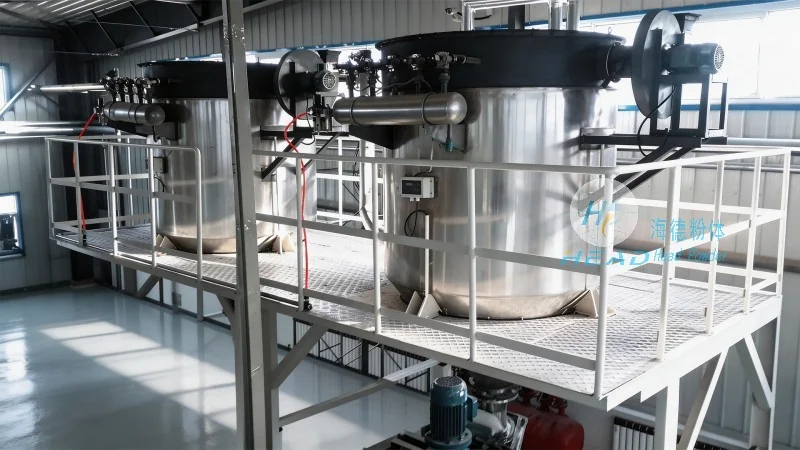
Following the sorting and conveying stages, the material may be processed further, such as through mixing or blending, to achieve the desired chemical composition. This step is particularly important for ternary lithium materials, as the precise ratio of nickel, cobalt, manganese, and lithium is critical for the battery's performance. The mixing process involves combining different raw materials in controlled proportions, often using high-shear mixers or planetary mixers to ensure uniform distribution of the components.
The entire system is typically controlled by a programmable logic controller (PLC) or a distributed control system (DCS), which coordinates the operation of all components. This automation ensures that the material handling process is efficient, consistent, and safe. The PLC monitors various parameters, such as material flow rates, conveyor speeds, and temperature, and adjusts the system as needed to maintain optimal performance. Additionally, sensors and feedback mechanisms are integrated into the system to detect any abnormalities or deviations, allowing for immediate corrective actions.
Key Features of Ternary Lithium Material Handling Systems
Ternary lithium material handling systems are characterized by several key features that enhance their performance and reliability in industrial settings. These features are designed to address the specific challenges of handling high-value, sensitive materials used in battery manufacturing.

Firstly, the systems are engineered for high efficiency and throughput. This is achieved through the integration of advanced conveying technologies and automated control systems, which minimize downtime and maximize production output. The use of multiple conveyor lines and parallel processing stages allows for continuous material flow, ensuring that the production line operates at optimal capacity. For instance, in a battery production facility, these systems can handle large volumes of raw materials, such as ternary lithium compounds, without compromising on speed or quality.
Secondly, the systems prioritize material purity and quality control. This is crucial because even minor impurities in the raw materials can significantly impact the performance and lifespan of the final battery products. The inclusion of sorting and screening mechanisms, as mentioned earlier, helps in maintaining high purity levels. Additionally, the systems may incorporate dust control measures, such as enclosed conveyor systems and filtration units, to prevent contamination and ensure a clean working environment. These measures are essential for meeting the stringent quality standards required in the battery industry.
Thirdly, the systems are designed for flexibility and adaptability. This allows them to accommodate different types of materials and production requirements. For example, the conveyor systems can be easily adjusted to handle various particle sizes and flow rates, while the mixing and blending units can be configured to produce different chemical compositions. This flexibility is particularly valuable in industries where product specifications may change frequently or where multiple product lines are produced.

Fourthly, the systems emphasize safety and operational reliability. Safety features, such as emergency stop buttons, overload protection, and interlocks, are integrated into the design to prevent accidents and ensure the well-being of operators. The use of robust materials and components, such as stainless steel for conveyor parts and high-quality motors, enhances the system's durability and reduces the risk of breakdowns. Additionally, the automated control systems provide real-time monitoring and diagnostics, allowing for quick identification and resolution of any issues that may arise.
Fifthly, the systems are built with energy efficiency in mind. This is important for reducing operational costs and minimizing the environmental impact of the production process. The use of energy-efficient motors, variable speed drives, and optimized conveyor designs helps in reducing energy consumption. Furthermore, the integration of energy recovery systems, such as regenerative drives, can further enhance energy efficiency. These measures contribute to a more sustainable and cost-effective operation.
Conclusion
In conclusion, ternary lithium material handling systems play a vital role in the efficient and reliable production of high-performance lithium-ion batteries. Their working principles, which involve automated material intake, conveying, sorting, and processing, are designed to handle the specific challenges of ternary lithium materials. The key features of these systems, including high efficiency, material purity, flexibility, safety, and energy efficiency, make them indispensable in modern battery manufacturing facilities. By understanding and leveraging these principles and features, manufacturers can optimize their production processes, improve product quality, and stay competitive in the rapidly evolving battery industry.