

Working Principle and Features of Denitrification Urea Pneumatic Conveying Equipment
The denitrification urea pneumatic conveying equipment operates on the principle of pneumatic transport, which involves the use of compressed air or other gas to move solid materials like urea through a pipeline system. In the context of flue gas denitrification, this equipment is designed to efficiently transport urea, a common reagent used in selective catalytic reduction (SCR) systems, from storage to the injection point within a power plant or industrial facility. The process typically begins with the urea being fed into a hopper or storage tank. From there, it is conveyed through a pipeline using a controlled flow of air or nitrogen. The equipment may incorporate components such as rotary valves, feeders, and pressure vessels to ensure a consistent and reliable flow of urea. The compressed air creates a negative pressure or positive pressure environment within the pipeline, which propels the urea particles forward. This method allows for the safe and efficient transport of urea over long distances, even in challenging environmental conditions, ensuring that the reagent is delivered precisely where it is needed for effective NOx reduction.


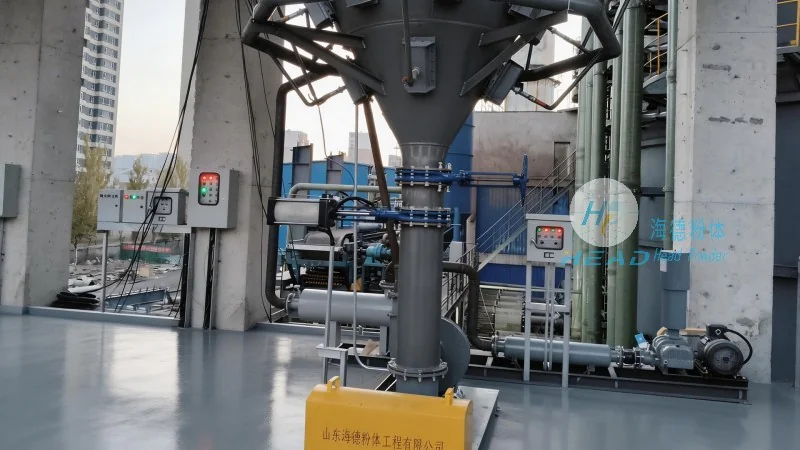

Key Features of Denitrification Urea Pneumatic Conveying Equipment
Denitrification urea pneumatic conveying equipment from Shandong HeadPowder Engineering Co., Ltd. is engineered with several key features that enhance its performance and reliability. One of the primary features is its high efficiency in material transport, which minimizes the time and energy required to move urea from storage to the denitrification system. The equipment is designed to handle varying flow rates and particle sizes, making it versatile for different industrial applications. Additionally, it incorporates advanced control systems that allow for precise regulation of the air flow and urea feed, ensuring consistent delivery of the reagent. This precision is crucial for maintaining optimal denitrification efficiency and reducing the risk of over- or under-dosing. Another notable feature is the equipment's ability to operate in a closed system, which helps to prevent dust emissions and environmental contamination. The closed-loop design also improves safety by containing the urea and preventing exposure to personnel. Furthermore, the equipment is constructed with durable materials that are resistant to corrosion and wear, ensuring long-term operation with minimal maintenance. These features collectively contribute to the equipment's effectiveness in supporting flue gas denitrification processes, providing a reliable solution for industrial facilities seeking to comply with environmental regulations.
About Shandong HeadPowder Engineering Co., Ltd.
Shandong HeadPowder Engineering Co., Ltd., commonly known as HeadPowder, is a leading manufacturer specializing in pneumatic conveying systems and related industrial equipment. With a focus on innovation and quality, the company has developed advanced solutions for material handling in various industries, including power generation, chemical processing, and environmental protection. HeadPowder's denitrification urea pneumatic conveying equipment is a testament to the company's commitment to providing efficient and reliable solutions for NOx reduction. The company's products are designed to meet the stringent requirements of modern industrial applications, ensuring compliance with environmental standards while optimizing operational performance. HeadPowder's expertise in engineering and manufacturing enables it to deliver customized solutions tailored to the specific needs of each client, enhancing the overall effectiveness of their denitrification systems. Based in Shandong, China, HeadPowder leverages its local resources and industry knowledge to support clients globally, providing comprehensive technical support and after-sales service.