

What is the Pneumatic Conveying of Quicklime Material? Understanding Design Principles
Quicklime, also known as calcium oxide (CaO), is a crucial industrial material widely used in various sectors such as construction, chemical manufacturing, and environmental treatment. The efficient and reliable transportation of quicklime from storage to processing units is essential for maintaining production efficiency and safety. Pneumatic conveying systems have emerged as a preferred method for handling quicklime due to their ability to transport materials in a dust-free environment, reduce labor costs, and enhance operational safety. This article delves into the concept of quicklime material pneumatic conveying and explores the fundamental design principles that underpin such systems.

Introduction to Quicklime and Pneumatic Conveying
Quicklime is produced by heating limestone (calcium carbonate, CaCO₃) to high temperatures, typically around 900-1000°C, in a kiln. This process drives off carbon dioxide, leaving behind calcium oxide. The resulting quicklime is a fine, powdery substance that is highly reactive and can cause severe burns upon contact with skin or eyes. Given its hazardous nature and the need for precise handling, traditional methods like bucket elevators or belt conveyors are often inadequate due to the risk of dust generation and material degradation. Pneumatic conveying offers a solution by using a stream of air to transport the material through a pipeline, minimizing direct contact and reducing the risk of dust exposure.
Key Components of a Pneumatic Conveying System for Quicklime
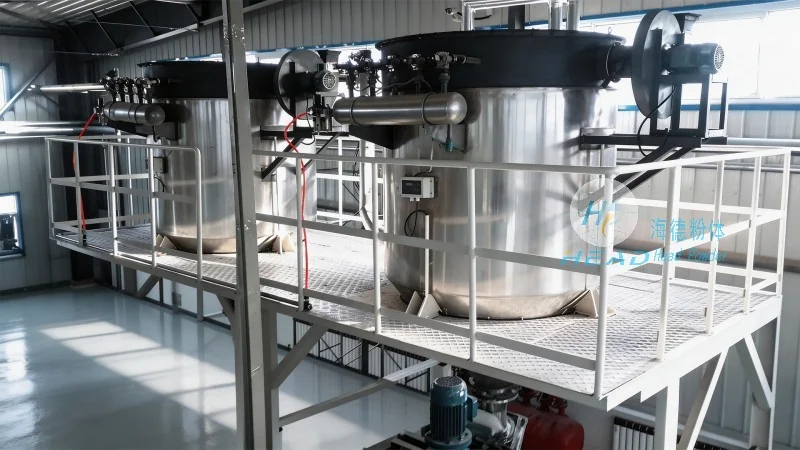
A pneumatic conveying system for quicklime typically consists of several key components that work in tandem to ensure efficient material transport. The primary components include a material feeder, a conveying pipeline, a blower or air compressor, a dust collector, and a discharge device. Each component plays a critical role in the overall operation of the system.
The material feeder is responsible for feeding the quicklime into the conveying pipeline at a controlled rate. This component must be designed to handle the flow characteristics of quicklime, which can vary depending on moisture content, particle size, and bulk density. Common types of feeders include rotary valves, screw feeders, and vibratory feeders, each with its own advantages and limitations. For quicklime, which is often a fine powder, a rotary valve or a screw feeder with a high capacity and low pressure drop is preferred to maintain consistent flow and prevent blockages.
The conveying pipeline is the main channel through which the quicklime travels. It is usually made of stainless steel or other corrosion-resistant materials to withstand the chemical properties of quicklime and prevent material buildup. The pipeline is designed with appropriate bends and elbows to guide the material smoothly from the feeder to the discharge point. The diameter and length of the pipeline are critical factors that affect the system's performance, as they influence the pressure drop and the required air velocity.

The blower or air compressor provides the necessary air pressure to move the quicklime through the pipeline. The choice of equipment depends on the system's capacity and the required air velocity. High-pressure blowers are commonly used for dense-phase conveying, where the material is conveyed in a slurry-like state, while low-pressure blowers are suitable for dilute-phase conveying, where the material is suspended in the air stream. The air compressor must be capable of delivering sufficient airflow and pressure to overcome the resistance in the pipeline and maintain the material's suspension.
The dust collector is an essential component for maintaining air quality and complying with environmental regulations. It captures any fine particles of quicklime that may escape the conveying system and returns them to the pipeline or storage. The dust collector can be a baghouse, an electrostatic precipitator, or a cyclone separator, depending on the system's requirements. Proper maintenance of the dust collector is crucial to ensure its efficiency and prevent dust accumulation.
The discharge device is responsible for releasing the quicklime from the pipeline into the receiving hopper or processing unit. This component must be designed to handle the material's flow characteristics and prevent blockages or spillage. Common discharge devices include rotary valves, gate valves, and slide gates. The selection of the discharge device depends on the downstream process requirements and the need for controlled material release.
Design Principles for Efficient Quicklime Pneumatic Conveying
The design of a pneumatic conveying system for quicklime involves several key principles aimed at optimizing performance, minimizing energy consumption, and ensuring safety. These principles include maintaining appropriate air velocity, controlling pressure drop, managing material flow, and ensuring system reliability.

One of the most critical design principles is maintaining an appropriate air velocity within the pipeline. The air velocity must be high enough to keep the quicklime particles suspended in the air stream but not so high as to cause excessive pressure drop or energy consumption. The optimal air velocity depends on the particle size, density, and flow rate of the quicklime. For fine quicklime powders, an air velocity of 20-30 meters per second is typically recommended for dilute-phase conveying, while higher velocities may be required for dense-phase conveying.
Another important principle is controlling the pressure drop in the system. The pressure drop is the difference in pressure between the inlet and outlet of the conveying pipeline and is a measure of the system's resistance to flow. High pressure drop can lead to increased energy consumption and reduced system capacity. The pressure drop is influenced by factors such as pipeline length, diameter, bends, and the type of material being conveyed. Designers must calculate the pressure drop accurately to select the appropriate blower or air compressor and ensure the system operates efficiently.
Managing the material flow is also a crucial aspect of system design. The flow rate of quicklime must be controlled to prevent overloading the system and causing blockages or pressure surges. This is achieved through the use of controlled feeders and appropriate pipeline sizing. The material's bulk density and flow characteristics, such as angle of repose and cohesion, must be considered to ensure smooth and consistent flow. For quicklime, which can be cohesive and prone to bridging, the use of vibratory feeders or rotary valves with anti-bridging features is recommended to maintain stable flow.
System reliability is a key consideration in the design of pneumatic conveying systems for quicklime. The system must be able to operate continuously without frequent maintenance or downtime. This requires the use of high-quality components, regular maintenance schedules, and proper system monitoring. The design should also include safety features such as pressure relief valves, dust explosion suppression systems, and emergency shut-off mechanisms to protect personnel and equipment from potential hazards.
Advantages of Pneumatic Conveying for Quicklime Handling
Pneumatic conveying systems offer several advantages over traditional material handling methods for quicklime. These advantages include improved safety, reduced dust exposure, lower labor costs, and enhanced operational flexibility. By transporting quicklime in a closed system, the risk of dust inhalation and skin contact is significantly reduced, protecting workers from health hazards. Additionally, the closed system prevents material loss and contamination, ensuring the quality of the quicklime remains consistent.
Another advantage is the ability to transport quicklime over long distances without the need for multiple transfer points or elevators. This reduces the overall footprint of the system and minimizes the risk of material degradation due to exposure to the environment. The system also allows for easy integration with downstream processing units, such as reactors or reactors, by providing a direct and controlled feed of quicklime.
From an operational perspective, pneumatic conveying systems are more energy-efficient compared to traditional methods, especially when handling fine powders. The use of a single pipeline to transport material from storage to processing units eliminates the need for multiple conveyors and reduces the overall energy consumption. Furthermore, the system can be easily scaled up or down to meet changing production demands, providing flexibility in production planning.