

What is an Intelligent Weighing Material Handling System? What are its Design Principles?
Intelligent weighing material handling systems represent a sophisticated integration of weighing technology and material handling processes, designed to enhance efficiency, accuracy, and operational control in industrial environments. These systems are engineered to handle the dynamic needs of modern manufacturing and logistics, providing real-time data and automated responses to optimize workflow. The core of such systems lies in the seamless combination of precise weight measurement with advanced material transport mechanisms, ensuring that materials are moved, weighed, and managed with minimal human intervention.

About Shandong HeadPowder Engineering Co., Ltd.
Shandong HeadPowder Engineering Co., Ltd. is a leading manufacturer specializing in the design, development, and implementation of intelligent weighing and material handling solutions. With a focus on precision engineering and customer-centric innovation, the company has established itself as a trusted partner in various industries, including pharmaceuticals, food processing, and chemical manufacturing. HeadPowder's commitment to quality and technological advancement ensures that their systems meet the highest standards of performance and reliability. The company is headquartered in Shandong, China, where it leverages local expertise and resources to deliver tailored solutions that address specific industry challenges.
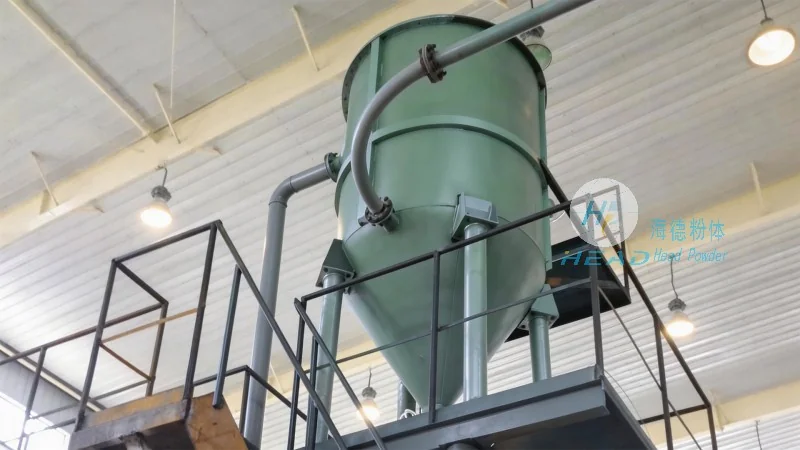
Design Principles of Intelligent Weighing Material Handling Systems
The design of intelligent weighing material handling systems is guided by several key principles that ensure optimal performance and adaptability. First, the integration of high-precision load cells and sensors enables accurate weight measurement, even for dynamic or moving loads. This is crucial for applications where materials are being transported while being weighed, such as in conveyor-based systems. Second, the use of advanced control systems, including programmable logic controllers (PLCs) and industrial computers, allows for real-time monitoring and adjustment of the system's parameters. These controls can adjust conveyor speed, load distribution, and weighing intervals based on real-time data, ensuring consistent accuracy and minimizing downtime. Third, the incorporation of automation and robotics enhances the system's ability to handle complex tasks, such as sorting, packaging, and re-routing materials based on weight criteria. This automation reduces the need for manual intervention, improving safety and operational efficiency. Fourth, the system's modular design facilitates scalability and customization, allowing it to be adapted to different production volumes and operational requirements. This flexibility is essential for industries that experience fluctuations in demand or require diverse product handling capabilities.

Key Components and Their Functions
Intelligent weighing material handling systems typically consist of several interconnected components, each playing a critical role in the overall functionality. The primary components include: 1. Weighing Sensors: High-precision load cells or strain gauges that convert the weight of the material into an electrical signal. These sensors are mounted on the conveyor or handling equipment to provide accurate weight measurements. 2. Conveyor Systems: The transport mechanism that moves materials through the weighing process. Conveyor types may vary, such as belt conveyors, chain conveyors, or roller conveyors, depending on the material characteristics and handling requirements. 3. Control Unit: A central processing unit, often a PLC or industrial computer, that processes the weight data from the sensors and controls the conveyor speed and other operational parameters. 4. Display and Reporting Interface: A user interface that provides real-time weight data, historical records, and reporting capabilities. This interface allows operators to monitor the system's performance and generate reports for quality control or inventory management. 5. Automation Modules: Components such as sorters, diverters, or robotic arms that can be integrated to automate material handling based on weight criteria. For example, a sorter may divert over-weight or under-weight items to separate bins, while a robotic arm may handle the packaging of specific products. Each component is designed to work in harmony, ensuring that the system operates efficiently and reliably under various conditions.
Applications in Industrial Settings
Intelligent weighing material handling systems are widely used across various industries due to their ability to enhance operational efficiency and product quality. In the pharmaceutical industry, these systems are essential for ensuring the accurate dosing and packaging of medications, where even minor variations in weight can have significant health implications. The systems help maintain strict quality control standards by automatically detecting and rejecting under- or over-dosed products. In food processing, the technology is used to ensure consistent product weight, which is critical for meeting regulatory requirements and customer expectations. For example, in snack food production, the system can weigh individual bags or portions to ensure uniform weight, reducing waste and improving profitability. In the chemical industry, the systems are used to handle bulk materials, such as powders or liquids, ensuring accurate measurement and mixing. This is particularly important in processes where precise chemical ratios are required, such as in the production of fertilizers or specialty chemicals. The versatility of intelligent weighing material handling systems makes them suitable for a wide range of applications, from small-scale batch processing to large-scale continuous production lines.

Conclusion
Intelligent weighing material handling systems represent a significant advancement in industrial automation, combining precise weighing technology with efficient material transport to optimize workflow and enhance product quality. The design principles, including high-precision sensors, advanced control systems, automation, and modular flexibility, ensure that these systems can adapt to diverse operational needs. Companies like Shandong HeadPowder Engineering Co., Ltd. play a crucial role in developing and implementing such systems, providing tailored solutions that address the specific challenges of different industries. By leveraging these advanced systems, businesses can improve operational efficiency, reduce costs, and maintain compliance with industry standards. As technology continues to evolve, intelligent weighing material handling systems will likely become even more sophisticated, further revolutionizing industrial processes and contributing to the growth of global manufacturing and logistics.