

What is a Cement Granular Material Conveying Line? And What Are Its Design Principles?
For industrial operations that handle bulk cement and similar granular materials, understanding the cement granular material conveying line is crucial. This system is engineered to efficiently transport large volumes of cement and other similar powders from one location to another within a production facility or between different sites. The design of such a conveying line is based on several key principles that ensure reliability, efficiency, and safety in material handling.

What is a Cement Granular Material Conveying Line?
A cement granular material conveying line is a specialized system designed to transport bulk cement and other granular materials. These systems are commonly used in cement plants, construction sites, and industrial facilities where large quantities of cement need to be moved over short or long distances. The primary components of a typical conveying line include feeders, conveyors (such as belt conveyors, screw conveyors, or pneumatic conveyors), and control systems. The system is engineered to handle the specific properties of cement, including its fine particle size, cohesive nature, and potential for dust generation.
Key Design Principles of Cement Granular Material Conveying Lines
The design of a cement granular material conveying line is guided by several fundamental principles to ensure optimal performance. First, the system must be capable of handling the bulk density and flow characteristics of cement. Cement is a fine powder with a relatively low bulk density, which can affect the conveying efficiency. Therefore, the design incorporates appropriate feed mechanisms to ensure consistent material flow and prevent blockages. Second, the system must address the cohesive and abrasive nature of cement. Cement particles tend to stick together and can be abrasive to equipment surfaces, so the design includes features like smooth surfaces, appropriate materials of construction, and possibly anti-sticking coatings to minimize wear and ensure smooth operation.

Third, the conveying line must be designed for dust control and environmental safety. Cement dust is a health hazard and can cause environmental pollution. The system typically includes dust collection and filtration systems to capture and remove airborne particles. Additionally, the design may incorporate sealed components and proper ventilation to maintain a safe working environment. Fourth, the system must be energy-efficient and cost-effective. The design considers factors such as the length of the conveying distance, the required capacity, and the power consumption of the equipment. Efficient motor selection and control systems are used to minimize energy usage while maintaining the required conveying speed.
Components and Functionality of the Conveying Line
The cement granular material conveying line consists of several interconnected components that work together to achieve the desired material transport. The feeders are the first component, responsible for feeding the cement into the conveyor system. Common types of feeders include rotary feeders, belt feeders, and screw feeders, each designed to handle different material characteristics and flow rates. The conveyor itself is the core of the system, responsible for moving the cement along the desired path. Belt conveyors are widely used due to their ability to handle large volumes and long distances, while screw conveyors are suitable for vertical or inclined transport. Pneumatic conveyors, or air slides, are also used for transporting fine powders like cement, using air pressure to move the material through a pipeline.
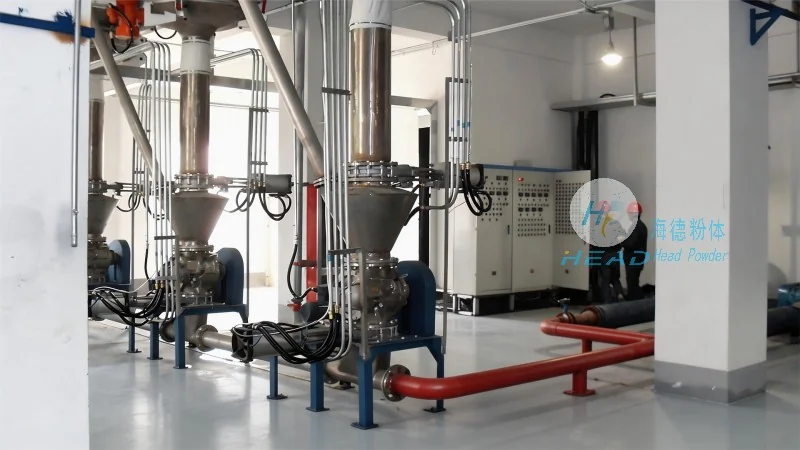
The control system is another critical component, responsible for monitoring and regulating the operation of the conveying line. This system includes sensors to detect material levels, flow rates, and any blockages, as well as control valves and motors to adjust the speed and direction of the conveyor. The control system ensures that the conveying line operates smoothly and safely, preventing overloading or underloading of the equipment.

Applications and Benefits of Cement Granular Material Conveying Lines
Cement granular material conveying lines are used in a variety of applications across different industries. In cement production facilities, these systems are used to transport raw materials to the grinding mills and finished cement to storage silos. In construction sites, they are used to deliver cement to mixing plants and job sites. The benefits of using a well-designed conveying line include increased efficiency in material handling, reduced labor costs, improved safety by minimizing manual handling of cement, and lower environmental impact due to better dust control.
About Shandong HeadPowder Engineering Co., Ltd.
Shandong HeadPowder Engineering Co., Ltd., a leading provider of industrial material handling solutions, specializes in designing and manufacturing cement granular material conveying lines. With years of experience in the industry, the company has developed a reputation for delivering high-quality, reliable systems that meet the specific needs of its clients. The company's headquarters is located in Shandong, China, where it has a team of skilled engineers and technicians dedicated to research, development, and customer support. HeadPowder Engineering focuses on providing customized solutions that enhance operational efficiency and safety for its clients, ensuring that their conveying systems are tailored to the unique requirements of each project.