

What is Fully Automatic Weighing Material Conveying? And What Are Its Design Principles?
In industrial manufacturing and material handling, the efficient and precise transfer of bulk materials while ensuring accurate weight measurement is crucial for maintaining production quality and operational efficiency. The fully automatic weighing material conveying system addresses these needs by integrating advanced weighing technology with automated material transport mechanisms. This system is designed to streamline the process of moving materials from one point to another within a production facility while simultaneously measuring their weight, eliminating the need for manual intervention and reducing potential errors.

Overview of Fully Automatic Weighing Material Conveying
The fully automatic weighing material conveying system is a sophisticated piece of equipment used in various industries, including pharmaceuticals, food processing, chemicals, and manufacturing. Its primary function is to transport bulk materials through a conveyor system equipped with integrated weighing scales. The system operates autonomously, from material loading to weighing and unloading, without requiring constant human supervision. This automation not only enhances productivity but also ensures consistent accuracy in weight measurement, which is vital for quality control and compliance with industry standards.

Design Principles of the System
The design of a fully automatic weighing material conveying system is based on several core principles that ensure reliability, efficiency, and accuracy. The first principle is the integration of a high-precision load cell or scale with a conveyor belt or roller system. The load cell is responsible for detecting the weight of the material as it moves along the conveyor, while the conveyor ensures a smooth and continuous flow. Another key principle is the use of sensors and control systems to monitor the material flow and adjust the conveyor speed as needed. This dynamic adjustment helps maintain consistent weight measurements and prevents overloading or underloading of the system. Additionally, the system incorporates data acquisition and processing units that collect weight data and transmit it to a central control panel or computer system for further analysis and reporting.

Key Components and Their Functions
Several critical components work together to make the fully automatic weighing material conveying system function effectively. The primary components include the conveyor mechanism, which can be a belt conveyor, screw conveyor, or chain conveyor, depending on the material type and handling requirements. The weighing scale, typically a platform scale or a load cell integrated into the conveyor, is responsible for measuring the weight of the material. Sensors, such as photoelectric sensors or proximity sensors, are used to detect the presence of material and trigger the weighing process. The control system, often a programmable logic controller (PLC), manages the operation of the conveyor and the weighing scale, ensuring that the system operates in a coordinated manner. Finally, the data processing unit, which may include a computer or a dedicated weighing controller, processes the weight data and can generate reports or send alerts if the weight is outside the specified range.
Common Applications in Industrial Settings
The fully automatic weighing material conveying system finds applications in a wide range of industrial settings where bulk material handling and accurate weight measurement are essential. In the pharmaceutical industry, for example, the system is used to transport raw materials and finished products while ensuring precise weight control, which is critical for dosage accuracy and regulatory compliance. In food processing, the system helps maintain consistent product weight, ensuring that each batch meets quality standards and customer expectations. The chemical industry also benefits from this system, as it allows for the accurate measurement of chemical ingredients during the production process, preventing variations in product composition. Additionally, in manufacturing plants, the system is used to transport raw materials to production lines and to weigh the output, helping to monitor production efficiency and identify any deviations in material usage.
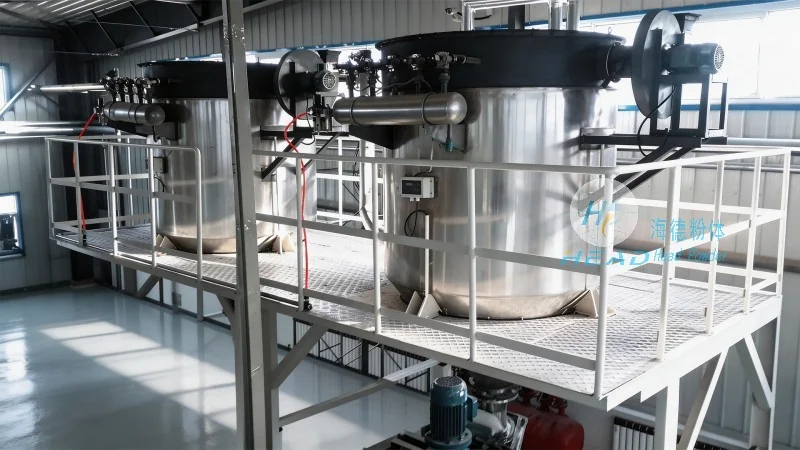
About Shandong HeadPowder Engineering Co., Ltd.
Shandong HeadPowder Engineering Co., Ltd., commonly known as HeadPowder, is a leading manufacturer of industrial equipment specializing in material handling and weighing solutions. With a strong focus on innovation and quality, HeadPowder has developed a range of fully automatic weighing material conveying systems that meet the diverse needs of various industries. The company's products are designed to enhance operational efficiency, improve accuracy, and reduce labor costs for its clients. HeadPowder's commitment to customer satisfaction and technical excellence has made it a trusted partner in the industry, providing reliable and durable equipment that delivers long-term value. Based in Shandong, China, HeadPowder leverages its local expertise and resources to deliver high-quality solutions tailored to the specific requirements of its global clients.