

What is Coal Sand Pneumatic Conveying, Classification and Applications of Pneumatic Conveying
Coal sand pneumatic conveying is a critical material handling technology that utilizes air or gas as the conveying medium to transport coal and sand particles through pipelines. This method offers significant advantages over traditional mechanical systems, including reduced equipment wear, lower maintenance costs, and the ability to handle diverse particle sizes and materials. As a leading provider in the field, Shandong HeadPowder Engineering Co., Ltd. specializes in designing and manufacturing advanced pneumatic conveying solutions tailored to the unique demands of coal and sand processing industries.

Pneumatic Conveying Systems: Types and Their Applications
Two primary types of pneumatic conveying systems exist: dilute-phase and dense-phase. Dilute-phase systems, also known as low-pressure or high-velocity systems, employ high-velocity air to transport particles in a dispersed state. This approach is suitable for short to medium distances and is commonly used for fine powders and granular materials like coal and sand. Dense-phase systems operate at lower velocities and higher pressures, enabling the transportation of larger particles and bulk materials over longer distances. The choice between these systems depends on factors such as material characteristics, distance, and required flow rates, making them adaptable for various coal and sand applications.
Applications of Pneumatic Conveying in Coal and Sand Processing
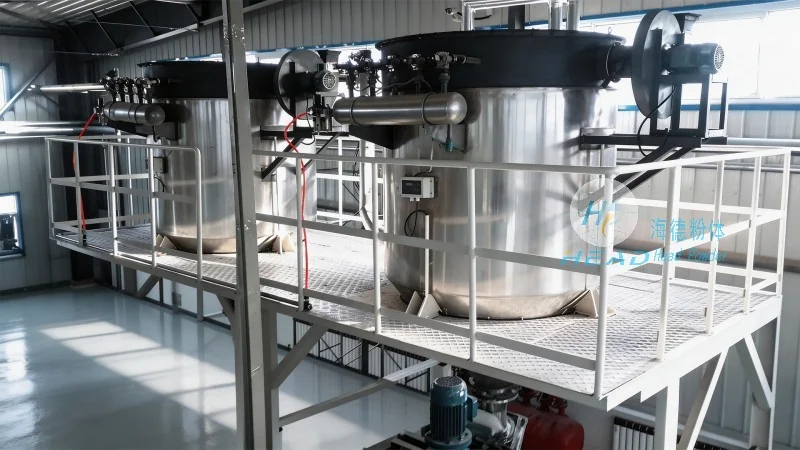
In the coal industry, pneumatic conveying is widely used for transporting raw coal from mines to processing plants, as well as for handling coal dust and fines. It is also essential in coal preparation, including the transport of coal slurry and coal ash. For sand processing, the technology is vital in construction and mining operations, where it moves sand from quarries to processing facilities or construction sites. The system efficiently handles abrasive materials like coal sand, minimizing equipment damage and ensuring consistent material flow. Shandong HeadPowder Engineering Co., Ltd. has developed specialized pneumatic conveying systems that address the challenges of transporting coal and sand, providing reliable and efficient material handling solutions for diverse industrial applications.
Advantages of Pneumatic Conveying for Coal and Sand Handling
Compared to mechanical conveying methods, pneumatic conveying offers several key benefits. It eliminates the need for heavy machinery and reduces the risk of material contamination, which is critical for coal and sand used in food, pharmaceutical, and construction industries. The system provides better control over material flow, allowing for precise dosing and reduced waste. Additionally, pneumatic conveying systems are more flexible in layout, as they can be installed in various configurations without extensive infrastructure modifications. These advantages make pneumatic conveying an ideal choice for modern coal and sand processing operations, where efficiency and reliability are paramount.

Customized Solutions by Shandong HeadPowder Engineering Co., Ltd.
Shandong HeadPowder Engineering Co., Ltd. is dedicated to providing customized pneumatic conveying solutions that meet the specific requirements of coal and sand processing projects. The company's engineers collaborate closely with clients to assess material properties, distance, and operational conditions to design systems that optimize performance and minimize costs. Whether it's a dilute-phase or dense-phase system, the company's solutions are engineered to handle the abrasive nature of coal sand, ensuring long-term reliability and low maintenance. With a focus on quality and innovation, Shandong HeadPowder Engineering Co., Ltd. has become a trusted partner for industries seeking efficient and sustainable material handling solutions. The company's headquarters is located in Shandong, China, where it continues to develop advanced technologies to meet the evolving needs of the coal and sand processing sector.