

Organic Salt Positive Pressure and Negative Pressure Conveying: A Comparative Analysis of Two Pneuma
Organic salt handling and transportation is a critical process in various industrial applications, requiring efficient and reliable systems to ensure product integrity and operational safety. Among the most common methods for pneumatic conveying of organic salts are positive pressure and negative pressure systems. Understanding the differences between these two approaches is essential for selecting the most suitable technology for specific operational needs. This article provides a detailed comparison of positive pressure and negative pressure conveying for organic salts, highlighting their characteristics, advantages, and typical applications.

Introduction to Pneumatic Conveying Systems for Organic Salts
Pneumatic conveying systems use air or other gases to transport bulk materials like organic salts through a pipeline. These systems are widely used due to their ability to handle materials that are difficult to convey by other means, such as those with high moisture content, abrasive properties, or those that require dust control. The choice between positive pressure and negative pressure conveying depends on factors including material characteristics, distance of transport, system complexity, and environmental considerations. Both methods have their own set of advantages and limitations, making it crucial to evaluate them carefully before implementation.
About Shandong HeadPowder Engineering Co., Ltd.
Shandong HeadPowder Engineering Co., Ltd., commonly known as HeadPowder, is a leading provider of customized pneumatic conveying solutions. With headquarters in Shandong, China, the company specializes in designing, manufacturing, and installing advanced systems tailored to the unique requirements of the chemical, food, and pharmaceutical industries. HeadPowder's expertise lies in optimizing material handling processes, ensuring high efficiency, minimal product degradation, and compliance with industry standards. The company's solutions are engineered to meet the specific challenges of organic salt transportation, offering both positive and negative pressure conveying options to suit diverse operational scenarios.

Positive Pressure Conveying: Principles and Applications
Positive pressure conveying operates by blowing air or gas into the material stream, creating a pressure higher than the ambient air pressure. This method is commonly used for short to medium-distance transport and is particularly effective for materials that are free-flowing and non-abrasive. The primary advantage of positive pressure systems is their ability to handle high material loads with minimal pressure drop, making them suitable for applications where the material needs to be conveyed over longer distances without significant loss of velocity. Additionally, positive pressure systems are generally easier to install and maintain, as they do not require complex vacuum equipment. However, they may generate more dust and require proper ventilation to manage air emissions. In the context of organic salts, positive pressure conveying is often preferred for transporting materials like sodium bicarbonate, potassium chloride, or other granular salts that are stable and non-reactive under pressure.
Negative Pressure Conveying: Principles and Applications
Negative pressure conveying, also known as vacuum conveying, works by creating a vacuum in the material line, drawing the material into the system using suction. This method is ideal for applications requiring dust-free handling and for transporting materials over longer distances, especially when the material is light and prone to segregation. Negative pressure systems are particularly effective for handling fine powders or materials that are sensitive to pressure, as they maintain a lower pressure environment that reduces product degradation. The main advantages of negative pressure conveying include better dust control, lower noise levels, and the ability to handle materials from multiple sources or at different heights. However, they are generally more complex and require more maintenance compared to positive pressure systems, as they involve vacuum pumps and more intricate piping. For organic salts, negative pressure conveying is commonly used for transporting materials such as sodium carbonate, calcium carbonate, or other powders that require a clean and controlled environment.
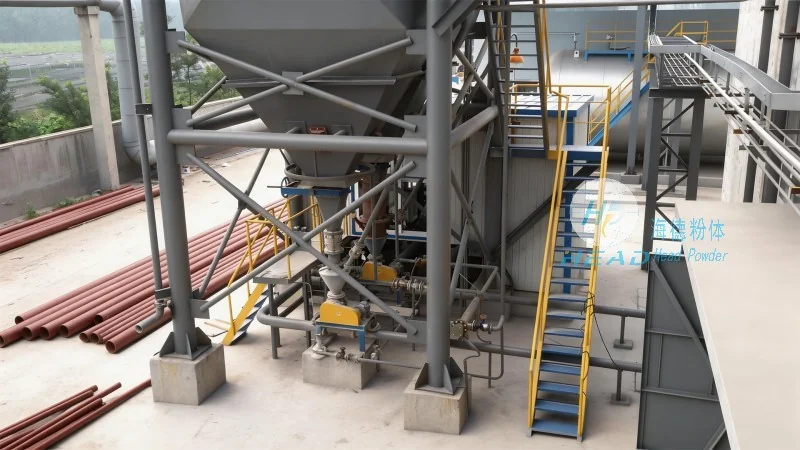
Comparative Analysis: Positive vs. Negative Pressure Conveying
When comparing positive and negative pressure conveying for organic salts, several key factors emerge. Positive pressure systems are generally more cost-effective for short-distance transport and for materials that are non-abrasive and free-flowing. They offer higher material throughput and are simpler to operate, making them suitable for applications where budget and ease of maintenance are primary concerns. Conversely, negative pressure systems excel in applications requiring dust control, longer transport distances, or for handling fine powders that are prone to segregation. They provide a cleaner and more controlled environment, which is critical for products that require high purity and minimal contamination. The choice between the two methods also depends on the specific properties of the organic salt, such as its moisture content, particle size, and reactivity. For example, materials with high moisture content may benefit from positive pressure systems to prevent caking, while fine powders may require negative pressure to avoid loss of material through the system.

Key Considerations for Selecting the Right Conveying Method
Choosing between positive and negative pressure conveying involves evaluating several technical and operational factors. The distance of the material transport is a primary consideration, as positive pressure systems are more efficient for shorter distances, while negative pressure systems are better suited for longer distances. Material characteristics, including particle size, density, and flowability, also play a significant role. Free-flowing, non-abrasive materials are often better suited for positive pressure, whereas fine powders or materials with high moisture content may require negative pressure to maintain product integrity. Environmental regulations and dust control requirements are another critical factor, as negative pressure systems generally offer better dust containment. Additionally, the system's complexity and maintenance requirements should be considered, as positive pressure systems are typically simpler and less expensive to maintain. HeadPowder's expertise in both positive and negative pressure conveying allows them to provide tailored solutions that address these factors, ensuring optimal performance and cost-effectiveness for each application.
Conclusion: Tailored Solutions for Organic Salt Conveying
In conclusion, both positive pressure and negative pressure conveying are effective methods for handling organic salts, each with its own set of advantages and limitations. The selection of the appropriate system depends on a comprehensive evaluation of operational requirements, material properties, and environmental considerations. Positive pressure conveying is ideal for short-distance transport of non-abrasive, free-flowing materials, offering high efficiency and simplicity. Negative pressure conveying, on the other hand, excels in applications requiring dust control, longer distances, and handling of fine or moisture-sensitive materials, providing a cleaner and more controlled environment. Shandong HeadPowder Engineering Co., Ltd. specializes in designing and implementing these systems, leveraging their expertise to deliver customized solutions that meet the unique needs of the organic salt industry. By understanding the differences between positive and negative pressure conveying, industries can make informed decisions to optimize their material handling processes, enhance product quality, and ensure operational efficiency.