

Design of a Negative Pressure Pneumatic Conveying System for Calcium Hydroxide
HeadPowder, a leading engineering company based in Shandong, China, specializes in the design and manufacturing of advanced material handling solutions. This article focuses on the design of a negative pressure pneumatic conveying system specifically tailored for the efficient transportation of calcium hydroxide, a key industrial chemical widely used in various applications such as construction, water treatment, and chemical manufacturing.

Company Overview and Expertise
Shandong HeadPowder Engineering Co., Ltd., commonly known as HeadPowder, is a reputable enterprise dedicated to providing high-quality engineering services and equipment for material handling. With years of experience in the industry, the company has built a strong reputation for delivering reliable and efficient solutions that meet the diverse needs of clients across different sectors. HeadPowder's commitment to innovation and precision engineering ensures that their products are designed to enhance operational efficiency and reduce costs for industrial applications.
Understanding Calcium Hydroxide and Its Handling Challenges
Calcium hydroxide, also known as slaked lime, is a white powder with a Mohs hardness of 1.5 and a density of approximately 2.24 g/cm³. It is hygroscopic, meaning it readily absorbs moisture from the air, which can lead to clumping and caking during storage and transportation. These characteristics make the material challenging to handle using conventional methods, as it can cause blockages in pipelines and affect the overall performance of conveying systems. Therefore, a specialized negative pressure pneumatic conveying system is essential to ensure the safe and efficient transport of calcium hydroxide.

Key Components of the Negative Pressure Pneumatic Conveying System
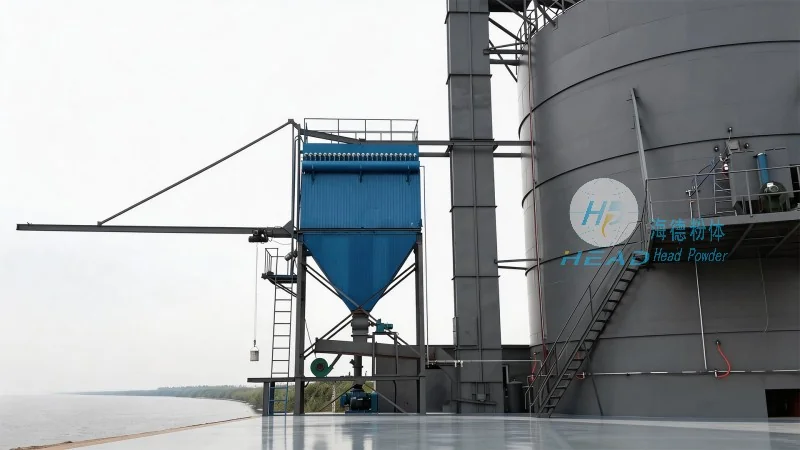
The negative pressure pneumatic conveying system designed by HeadPowder consists of several critical components that work in tandem to achieve efficient material transport. The main components include a hopper for material storage, a rotary airlock valve to control the flow of material into the system, a vacuum pump to create the negative pressure environment, and a pipeline network that transports the material from the source to the destination. Additionally, the system incorporates a dust collection and filtration unit to ensure environmental compliance and maintain air quality.
Design Considerations for Optimal Performance
During the design phase, several factors were considered to ensure the system's optimal performance and reliability. These include the material's physical properties, such as its particle size distribution and moisture content, which affect the air velocity required for conveying. The system's capacity and the distance between the source and destination were also critical factors in determining the appropriate vacuum pump size and pipeline diameter. Furthermore, the design incorporated features to minimize material degradation, such as using smooth and corrosion-resistant materials for the hopper and pipeline to prevent abrasion and chemical reactions.

Advantages of the Negative Pressure Pneumatic Conveying System
The negative pressure pneumatic conveying system offers several advantages over traditional conveying methods. One of the primary benefits is the ability to transport material over long distances without the need for intermediate storage or transfer points. This reduces the risk of material contamination and improves overall operational efficiency. Additionally, the system is capable of handling a wide range of material types, including powders and granules, with minimal maintenance requirements. The negative pressure environment also helps to prevent dust emissions, making it a more environmentally friendly solution compared to positive pressure systems.
Application Scenarios and Industry Impact
The calcium hydroxide negative pressure pneumatic conveying system is particularly suitable for industrial applications where large quantities of material need to be transported efficiently and safely. For example, in the construction industry, the system can be used to transport calcium hydroxide to job sites for use in concrete production and soil stabilization. In the water treatment industry, the system can deliver calcium hydroxide to treatment plants for pH adjustment and water purification. The system's versatility and reliability make it an ideal solution for various industrial applications, contributing to improved productivity and reduced operational costs.
Conclusion and Future Developments
HeadPowder's design of the negative pressure pneumatic conveying system for calcium hydroxide demonstrates the company's expertise in providing tailored material handling solutions. By addressing the unique challenges associated with calcium hydroxide, the system ensures efficient and safe transportation while maintaining environmental standards. As industrial demands continue to evolve, HeadPowder remains committed to innovation, continuously improving its products to meet the changing needs of the market. The company's dedication to quality and customer satisfaction ensures that its solutions remain at the forefront of material handling technology.