

Design of an Alumina Particle Pneumatic Conveying System
HeadPowder, a leading engineering firm based in Shandong, China, specializes in the design and implementation of advanced pneumatic conveying systems tailored for alumina particles. The company's expertise lies in creating efficient, reliable, and cost-effective solutions that meet the stringent requirements of the alumina industry. This article provides a detailed overview of the design considerations, technical specifications, and operational advantages of the alumina particle pneumatic conveying system, highlighting how such systems enhance process efficiency and material handling capabilities.

Key Design Principles for Pneumatic Conveying
The design of a pneumatic conveying system for alumina particles involves several critical principles aimed at optimizing performance and ensuring long-term reliability. First, the system must accommodate the physical properties of alumina, including its density, particle size distribution, and flow characteristics. Alumina particles are typically fine and abrasive, which necessitates the use of materials resistant to wear and corrosion, such as stainless steel or specialized alloys. The system design also considers the pressure and velocity requirements to achieve effective transport without causing particle degradation or system damage. HeadPowder engineers employ computational fluid dynamics (CFD) and empirical data to model the flow behavior of alumina particles in the conveying pipeline, ensuring that the system operates within safe and efficient parameters.
Components and Layout of the Conveying System
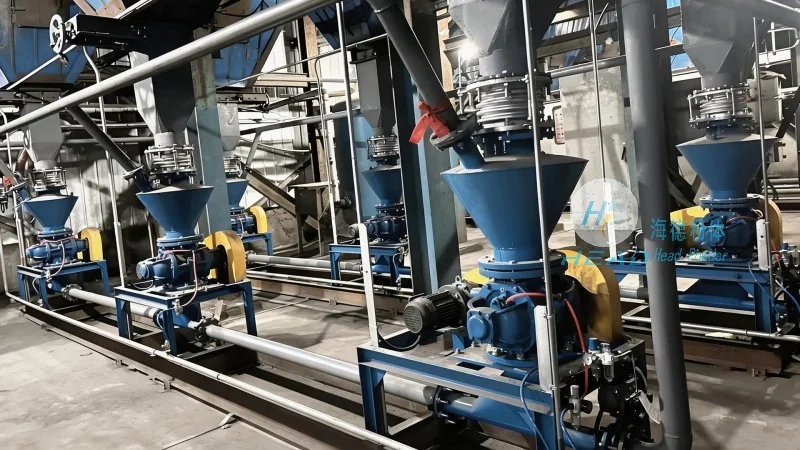
The alumina particle pneumatic conveying system consists of several key components, each playing a vital role in the overall operation. The primary components include the material feed hopper, which stores and feeds the alumina particles into the system; the air supply unit, which generates the necessary air pressure and flow; the conveying pipeline, which transports the particles; and the discharge unit, which delivers the material to the target location. The layout of the system is carefully planned to minimize pressure losses and ensure smooth material flow. For example, the pipeline may include bends, expansions, and contractions designed to maintain consistent velocity and prevent particle deposition. The feed hopper is equipped with a rotary valve or screw feeder to control the flow rate, while the air supply unit uses a blower or compressor to generate the required air pressure, typically ranging from 0.5 to 2 bar depending on the system size and material characteristics.

Advantages of Pneumatic Conveying for Alumina Handling
Compared to traditional mechanical conveying methods, pneumatic conveying offers several advantages for handling alumina particles. One of the most significant benefits is the ability to transport materials over long distances without the need for intermediate storage or transfer points. This reduces the risk of material contamination and improves process continuity. Additionally, pneumatic systems are less prone to blockages and can handle a wide range of particle sizes and shapes, including fine powders and irregularly shaped alumina particles. The system also provides better control over the material flow rate, allowing for precise dosing and integration with downstream processes. Another key advantage is the reduced maintenance requirements, as the system has fewer moving parts compared to mechanical conveyors, leading to lower operational costs and increased uptime.
Customization and Scalability of the System
HeadPowder understands that each alumina processing facility has unique requirements, and thus offers customized pneumatic conveying solutions tailored to specific needs. The company works closely with clients to assess their material handling challenges, process flow, and operational goals to design a system that meets their exact specifications. The systems can be scaled from small laboratory-scale units to large industrial-scale installations, accommodating varying production capacities and material throughput. Customization options include different pipeline materials, air treatment systems (such as filters and dryers) to handle moisture or dust, and control systems that integrate with existing plant automation. This flexibility ensures that the alumina particle pneumatic conveying system is not only efficient but also adaptable to the evolving needs of the alumina industry.
Operational Considerations and Maintenance
Proper operation and maintenance are crucial for the longevity and performance of the alumina particle pneumatic conveying system. HeadPowder provides comprehensive guidelines for system operation, including recommended air pressure settings, flow rate adjustments, and monitoring of system performance. Regular maintenance activities include cleaning of filters, inspection of pipeline for wear or damage, and replacement of worn components. The company also offers training programs for plant operators to ensure they are equipped with the knowledge to operate the system efficiently and safely. By adhering to these operational guidelines, clients can maximize the system's lifespan, minimize downtime, and maintain consistent material quality.
Conclusion
HeadPowder Engineering Co., Ltd., based in Shandong, China, provides expertly designed alumina particle pneumatic conveying systems that combine advanced engineering with practical application. These systems offer significant advantages in material handling efficiency, reliability, and cost-effectiveness, making them an ideal solution for alumina processing facilities. By adhering to rigorous design principles and offering customized solutions, HeadPowder ensures that its clients achieve optimal performance and meet their production goals. The company's commitment to quality and customer satisfaction has established it as a trusted partner in the alumina industry, delivering systems that enhance process efficiency and support sustainable operations.