

Operation Process and Working Principle of Sulfur Powder Conveying Equipment
For industrial applications involving sulfur powder, efficient and reliable conveying systems are essential to ensure smooth material handling and processing. Sulfur powder, known for its chemical properties and handling challenges, requires specialized equipment to maintain safety and operational efficiency. This article explores the operation process and working principle of sulfur powder conveying equipment, highlighting key components, operational steps, and the engineering solutions provided by Shandong HeadPowder Engineering Co., Ltd. (headpowder), a leading manufacturer based in China.
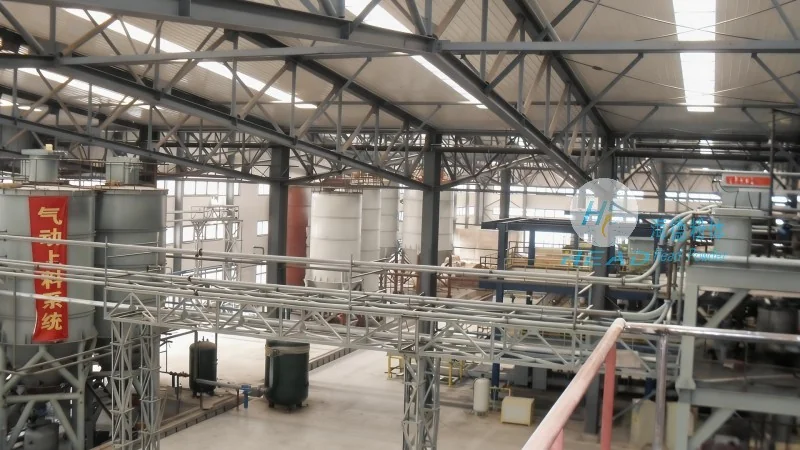
Key Components of Sulfur Powder Conveying Systems
The sulfur powder conveying equipment typically consists of several critical components that work in tandem to achieve effective material transport. These components include hoppers for material storage, feeders to control the flow rate, conveying mechanisms such as screw conveyors or pneumatic systems, and control systems to regulate the entire process. Each component plays a vital role in maintaining the integrity of the sulfur powder and ensuring safe operation. The hoppers are designed to accommodate bulk sulfur powder, often with a conical or rectangular shape to facilitate uniform feeding. Feeders, such as rotary valves or vibratory feeders, are used to regulate the flow of sulfur powder into the conveying line, preventing overloading and ensuring consistent material delivery. The conveying mechanism, whether mechanical or pneumatic, is the core of the system, responsible for transporting the sulfur powder from the source to the destination. Mechanical conveyors, like screw conveyors, use rotating screws to move the powder along a tube or trough, while pneumatic systems employ air pressure to push or pull the powder through pipelines. Control systems, including sensors and programmable logic controllers (PLCs), monitor the flow rate, pressure, and temperature, providing real-time feedback and adjustments to maintain optimal performance.
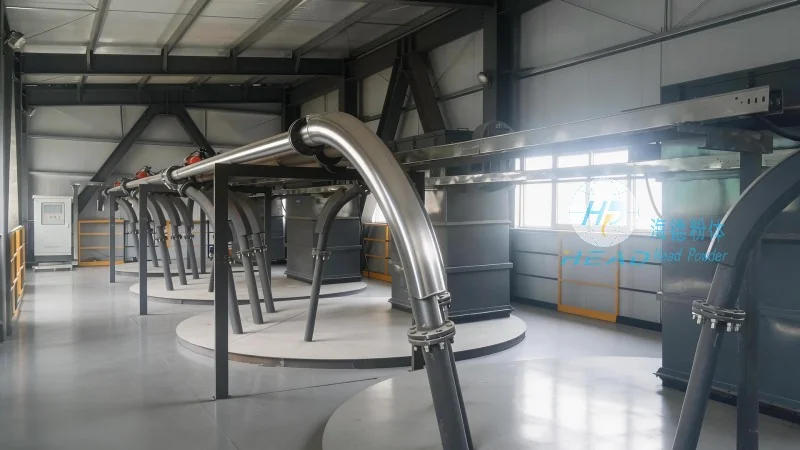
Operation Process of Sulfur Powder Conveying Equipment
The operation process of sulfur powder conveying equipment involves a series of steps that ensure the efficient and safe transport of the material. The process begins with the loading of sulfur powder into the hopper. The hopper is typically filled to a certain level, and the feed control system is activated to regulate the flow of powder into the conveyor. The feed rate is adjusted based on the required throughput, ensuring that the conveying system can handle the volume without causing blockages or excessive pressure. Once the powder is fed into the conveying mechanism, it is transported to the discharge point. In mechanical systems, the screw rotates, pushing the powder forward, while in pneumatic systems, compressed air creates a flow that moves the powder through the pipeline. The conveying speed is controlled to maintain a consistent flow rate, preventing material accumulation or degradation. At the discharge end, the powder is released into a receiving container or processing unit. The control system continuously monitors the entire process, adjusting parameters as needed to maintain stability. For example, if the pressure in the pneumatic system drops, the control system may increase the air supply to maintain flow. Similarly, in mechanical systems, the speed of the screw may be adjusted to compensate for variations in material density or flow rate. The entire operation is designed to be automated, with minimal human intervention required, enhancing safety and operational efficiency.

Working Principle of Sulfur Powder Conveying Equipment
The working principle of sulfur powder conveying equipment is based on the principles of fluid dynamics and mechanical motion. For pneumatic systems, the core principle is the use of air pressure to move the powder. The system generates a flow of air through the pipeline, and the sulfur powder is entrained in the air stream, creating a mixture known as a slurry or a dust-air mixture. The air pressure is sufficient to overcome the resistance of the powder particles and the friction within the pipeline, allowing the material to be transported efficiently. The velocity of the air is critical; it must be high enough to keep the powder suspended but not so high as to cause excessive wear on the pipeline or equipment. The mechanical components, such as screw conveyors, operate on the principle of positive displacement. The rotating screw pushes the powder forward, creating a continuous flow. The pitch and diameter of the screw are designed to handle the specific characteristics of sulfur powder, such as its density and flowability. The system is designed to minimize friction and wear, as sulfur powder can be abrasive and may cause corrosion over time. The control system plays a crucial role in maintaining the working principle by monitoring and adjusting the parameters. Sensors measure the pressure, flow rate, and temperature, and the PLC adjusts the air supply or screw speed accordingly. This feedback loop ensures that the system operates within optimal parameters, preventing issues such as blockages or material degradation. The overall working principle is to convert the energy from the air or mechanical motion into the movement of the sulfur powder, achieving efficient transport while maintaining safety and material integrity.

Engineering Solutions by Shandong HeadPowder Engineering Co., Ltd.
Shandong HeadPowder Engineering Co., Ltd., operating under the brand name headpowder, specializes in the design, manufacturing, and supply of sulfur powder conveying equipment. The company is based in China and has extensive experience in addressing the unique challenges of handling sulfur powder. Their engineering solutions are tailored to meet the specific requirements of industrial applications, ensuring that the equipment is reliable, efficient, and safe. The company's approach involves a thorough understanding of the material properties of sulfur powder, including its chemical composition, density, and flow characteristics. This knowledge allows them to design equipment that is optimized for the specific application, whether it's for bulk handling, processing, or storage. The equipment is manufactured using high-quality materials, such as stainless steel or corrosion-resistant alloys, to withstand the chemical and physical stresses of sulfur powder. The company also provides customization options, allowing clients to tailor the equipment to their specific needs. For example, the hopper design can be modified to accommodate different powder volumes, and the conveying mechanism can be adjusted to handle varying flow rates. The control systems are integrated with advanced technology, including sensors and PLCs, to provide real-time monitoring and automation. This ensures that the equipment operates at peak efficiency and maintains safety standards. The company's commitment to quality and innovation has made them a trusted partner in the industry, providing reliable solutions for sulfur powder conveying needs.