

Principle and Working Scene Characteristics of Nitrile Rubber Powder Conveying Lines
HeadPowder, a leading enterprise in the field of powder handling technology, specializes in the design and manufacturing of advanced conveying systems for various industrial applications. This article focuses on the principle and working scene characteristics of nitrile rubber powder conveying lines, providing a comprehensive overview of how these systems operate and their practical applications in industrial settings.

Understanding the Core Principle of Nitrile Rubber Powder Conveying Lines
Nitrile rubber powder conveying lines are engineered to efficiently transport nitrile rubber powder, a material widely used in the manufacturing of seals, gaskets, and other rubber products due to its excellent resistance to oil, fuel, and other chemicals. The core principle of these conveying systems revolves around the use of specialized equipment such as screw conveyors, pneumatic conveyors, and vacuum systems, which work in tandem to move the powder from the source to the destination while maintaining its quality and preventing contamination.
The operation typically begins with the feeding of nitrile rubber powder into the conveyor system. Depending on the system design, the powder may be fed via a hopper or a bulk bag discharger. From there, the powder is conveyed through a series of components including a conveyor screw, a drive motor, and a control system. The screw conveyor, for instance, uses rotating screws to push the powder forward, while pneumatic conveyors utilize air pressure to move the powder in a pipeline. The choice of system depends on factors such as the material's properties, the distance to be covered, and the required flow rate.

Key Working Scene Characteristics of Nitrile Rubber Powder Conveying Lines
The working scene characteristics of nitrile rubber powder conveying lines are tailored to meet the specific demands of industrial environments. These characteristics include high efficiency, low maintenance, and the ability to handle abrasive or sticky materials without causing blockages or degradation. For instance, in a manufacturing plant producing automotive seals, the conveying line must be capable of transporting nitrile rubber powder from storage silos to processing machines with minimal downtime and maximum throughput.
One of the critical aspects is the control of dust and air quality. Nitrile rubber powder is often fine and can generate dust during handling, which poses health and safety risks. Therefore, many conveying systems incorporate dust collection and filtration systems to ensure a clean working environment. Additionally, the system design considers the material's moisture content and temperature sensitivity, as nitrile rubber can degrade if exposed to excessive heat or moisture.

Applications and Industries Utilizing Nitrile Rubber Powder Conveying Lines
Nitrile rubber powder conveying lines are widely used in various industries where nitrile rubber is a key component. The automotive industry, for example, relies on these systems to transport nitrile rubber powder for the production of oil seals, fuel system components, and gaskets. The aerospace industry also uses nitrile rubber in high-performance applications, and the conveying lines ensure that the material is delivered to manufacturing facilities in a controlled manner. Furthermore, the chemical and pharmaceutical industries utilize nitrile rubber for specialized products, and the conveying systems help maintain the material's purity and consistency.
In each of these applications, the conveying line must be designed to handle the specific properties of nitrile rubber powder. For instance, in the automotive sector, the system may need to handle large volumes of powder and maintain a consistent flow rate to support high production speeds. In the aerospace industry, the system may need to incorporate additional safety features to prevent any material leakage or contamination, as the materials used are often under strict quality control.
Advantages of Using Nitrile Rubber Powder Conveying Lines
Implementing nitrile rubber powder conveying lines offers several advantages over traditional manual handling methods. Firstly, these systems significantly improve operational efficiency by automating the powder transport process, reducing labor costs and minimizing the risk of human error. Secondly, they enhance product quality by ensuring consistent material flow and preventing contamination, which is crucial for maintaining the performance of nitrile rubber products. Thirdly, the systems are designed for durability and low maintenance, reducing long-term operational costs.
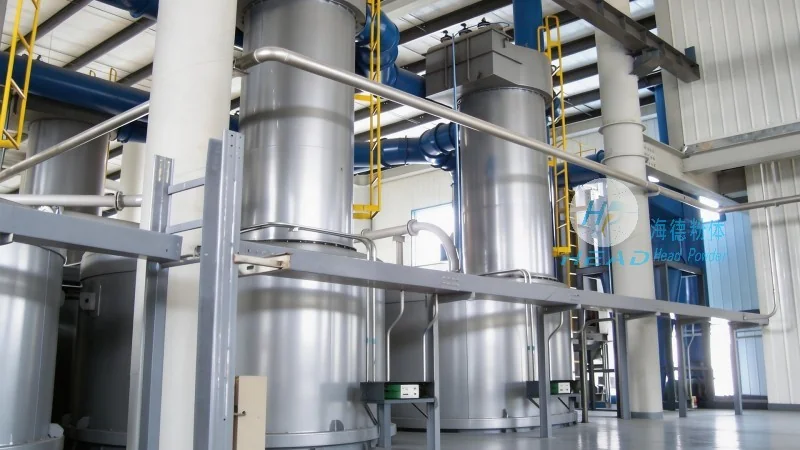
Another advantage is the ability to handle varying material conditions. Nitrile rubber powder can vary in size, moisture content, and density, and the conveying systems are engineered to accommodate these variations without compromising performance. This flexibility makes them suitable for a wide range of industrial applications, from small-scale manufacturing to large-scale production lines.
Conclusion
HeadPowder Engineering Co., Ltd., based in Shandong, China, is a trusted provider of nitrile rubber powder conveying lines and related equipment. By leveraging advanced technology and a deep understanding of industrial needs, the company ensures that its conveying systems meet the highest standards of efficiency, reliability, and safety. The principle and working scene characteristics of these systems are designed to address the unique challenges of handling nitrile rubber powder, making them an essential component in modern industrial operations.