

Principle and Working Scene Characteristics of Alumina Crystal Powder Conveying System
HeadPowder, a leading enterprise in the field of powder conveying technology, specializes in the design, manufacturing, and integration of advanced systems for handling alumina crystal powders. With a focus on precision, efficiency, and reliability, our systems are engineered to meet the demanding requirements of industrial applications where alumina crystals are processed and transported. This article explores the fundamental principles behind our alumina crystal powder conveying systems and highlights the key working scene characteristics that make them indispensable in modern manufacturing environments.

Company Profile and Expertise
HeadPowder, operating as Shandong HeadPowder Engineering Co., Ltd., is headquartered in Shandong, China. As a specialized manufacturer in powder handling solutions, we have accumulated extensive experience in developing customized conveying systems tailored to the unique needs of various industries. Our team of engineers and technicians leverages cutting-edge technology and rigorous quality control processes to ensure that each system we deliver meets the highest standards of performance and durability. By focusing on the specific challenges associated with alumina crystal powders—such as their abrasive nature, high density, and tendency to agglomerate—we design solutions that optimize material flow, minimize downtime, and enhance overall operational efficiency.
Principle of Alumina Crystal Powder Conveying Systems
The core principle of our alumina crystal powder conveying systems revolves around the use of advanced pneumatic or mechanical conveying technologies to transport fine or bulk alumina crystals from storage to processing equipment. These systems are typically designed with components such as hoppers, feeders, conveying lines, and control units that work in harmony to ensure smooth and continuous material movement. Pneumatic conveying, for instance, utilizes compressed air to create a flow of particles, while mechanical systems employ screw conveyors, belt conveyors, or bucket elevators to move the material. The choice of technology depends on factors like the particle size distribution, moisture content, and the distance to be covered. In both cases, the system is equipped with sensors and control mechanisms to monitor pressure, flow rate, and other critical parameters, ensuring that the conveying process remains stable and efficient.

Working Scene Characteristics
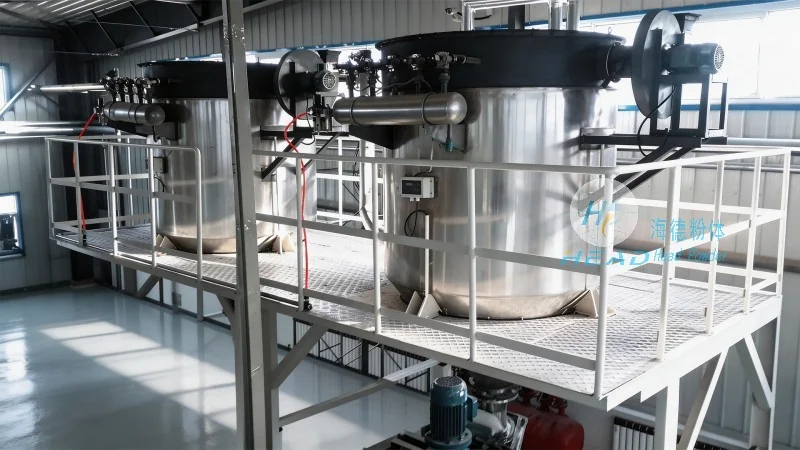
The working scene characteristics of our alumina crystal powder conveying systems are tailored to the specific operational environments where they are deployed. These characteristics include: 1. High Efficiency and Low Maintenance: Our systems are engineered for continuous operation with minimal downtime, featuring robust components that can withstand the abrasive and corrosive properties of alumina crystals. Regular maintenance is simplified through modular design and easy access to key parts, reducing operational costs and enhancing reliability. 2. Precise Material Control: The systems incorporate advanced control technologies, such as variable speed drives and flow meters, to regulate the quantity and speed of material transport. This precision is crucial in applications where exact dosing is required, such as in the production of ceramics, refractory materials, or pharmaceuticals. 3. Safety and Environmental Compliance: Safety is a top priority in our designs, with features like dust suppression systems, explosion-proof components, and enclosed conveying lines to prevent dust emissions and ensure a safe working environment. These systems also comply with environmental regulations, minimizing the impact on air quality and reducing the risk of contamination. 4. Scalability and Customization: Our alumina crystal powder conveying systems are highly scalable, allowing them to be adapted to different production capacities and layouts. Whether for small-scale laboratory applications or large-scale industrial plants, we can customize the system to meet the specific requirements of the client. This flexibility ensures that our solutions are suitable for a wide range of industries, including ceramics, electronics, and chemical manufacturing.
Application Scenarios
Our alumina crystal powder conveying systems are widely used in various industrial applications where alumina crystals are a key raw material. Some of the primary working scene characteristics and applications include: 1. Ceramic Manufacturing: In the production of high-quality ceramics, alumina crystals are used as a primary ingredient to enhance strength and thermal resistance. Our conveying systems efficiently transport the alumina powder from storage silos to mixing and molding equipment, ensuring consistent material quality and reducing the risk of contamination. 2. Refractory Production: Refractory materials, which are used in high-temperature applications like steelmaking and glass production, often incorporate alumina as a key component. Our systems help in the precise delivery of alumina powders to the production line, improving the uniformity of the refractory products and enhancing their performance under extreme conditions. 3. Electronics and Semiconductor Manufacturing: Alumina is used in the production of electronic components, such as capacitors and substrates, due to its excellent dielectric properties and thermal stability. Our conveying systems ensure that the alumina powder is delivered to the manufacturing line with minimal contamination, maintaining the high standards required for electronic applications. 4. Pharmaceutical and Chemical Industries: In the pharmaceutical sector, alumina is used as an adsorbent or filler in drug formulations. Our systems provide a clean and controlled environment for transporting the powder, ensuring that the final product meets stringent quality and safety standards. In the chemical industry, alumina is used in catalysts and other chemical processes, and our conveying systems help in the efficient and safe handling of these materials.
Advantages of Our Conveying Systems
When compared to traditional conveying methods, our alumina crystal powder conveying systems offer several distinct advantages that make them the preferred choice for many industries. These advantages include: 1. Reduced Downtime and Increased Productivity: By minimizing material handling errors and ensuring continuous flow, our systems help to increase production throughput and reduce the time spent on maintenance. 2. Improved Material Quality: The precise control over material flow and the absence of contamination in our systems result in higher quality alumina crystals, which translates to better performance in downstream processes. 3. Energy Efficiency: Advanced control technologies and optimized system designs help to reduce energy consumption, leading to lower operational costs and a smaller environmental footprint. 4. Enhanced Safety: The enclosed and dust-suppressed design of our systems eliminates the risk of dust explosions and ensures a safe working environment for operators. 5. Customization and Scalability: Our ability to tailor systems to specific client needs allows for seamless integration into existing production lines, whether for small or large-scale operations.