

What is a Rice Husk Ash Material Pneumatic Conveying System? And What Are Its Design Principles?
Rice husk ash (RHA) is a byproduct of rice processing, widely used in construction, agriculture, and environmental applications. Efficient and reliable material handling is crucial for processing RHA, and pneumatic conveying systems have emerged as a preferred solution. This article explores the concept of a rice husk ash material pneumatic conveying system and delves into its fundamental design principles, highlighting how such systems enhance operational efficiency and sustainability in material handling processes.

About HeadPowder: Your Trusted Pneumatic Conveying Solutions Provider
HeadPowder, operating as Shandong HeadPowder Engineering Co., Ltd., is a leading manufacturer specializing in the design, development, and implementation of advanced pneumatic conveying systems. With a strong presence in China, particularly in Shandong province, HeadPowder combines technical expertise and industry experience to deliver customized solutions tailored to the unique needs of clients handling rice husk ash and other bulk materials. The company's commitment to quality, innovation, and customer satisfaction has established it as a trusted partner in the material handling sector.
Understanding the Rice Husk Ash Material Pneumatic Conveying System
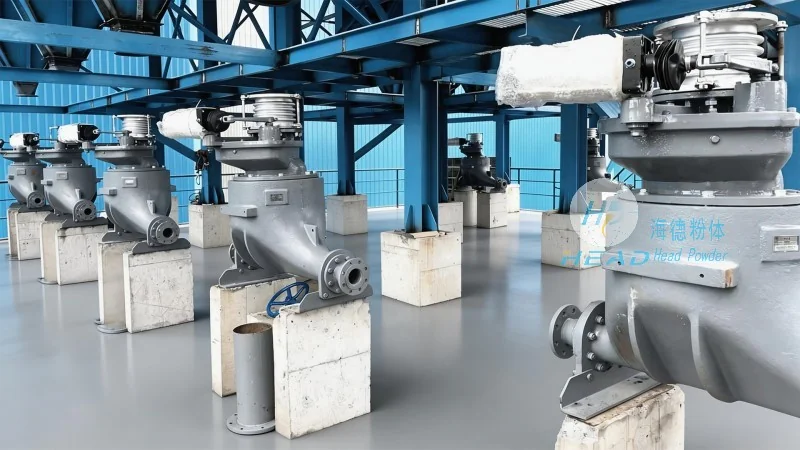
A rice husk ash material pneumatic conveying system is a specialized equipment setup designed to transport RHA and similar bulk materials through a pipeline using air or gas as the conveying medium. Unlike traditional mechanical conveying methods, which rely on belts, buckets, or screws, pneumatic systems utilize the force of moving air to move materials, offering advantages such as non-contact handling, reduced product degradation, and the ability to transport materials over long distances or through complex layouts. The system typically consists of several key components, including a material feed hopper, a conveying line (often with multiple sections), a control system, and a discharge unit. These components work in harmony to ensure smooth and continuous material flow from the source to the destination.

Design Principles Behind the Pneumatic Conveying System
The design of a rice husk ash pneumatic conveying system is based on the principles of fluid dynamics and material handling. The core concept involves creating a pressure or vacuum within the conveying line to move the material. In pressure systems, compressed air is introduced at the discharge end, pushing the material forward through the pipeline. In vacuum systems, a vacuum is created at the discharge end, drawing the material from the source. The choice between pressure and vacuum depends on factors such as the material's properties, the distance to be covered, and the layout of the facility. The system's design also considers the particle size, density, and flow characteristics of RHA, ensuring that the conveying velocity and pressure are optimized to prevent blockages and maintain consistent flow rates. Additionally, the pipeline design, including the use of bends, expansions, and filters, is critical to maintaining system efficiency and preventing material buildup or degradation.
Advantages of the Rice Husk Ash Pneumatic Conveying System
Implementing a rice husk ash material pneumatic conveying system offers several key advantages that enhance operational performance and sustainability. First, the system provides a clean and hygienic method of material handling, as it does not involve direct contact between the material and equipment, reducing the risk of contamination and product degradation. Second, pneumatic systems are highly efficient in terms of energy consumption compared to traditional mechanical conveyors, especially for long-distance or complex routes. Third, the system can handle a wide range of material characteristics, including varying particle sizes and moisture content, making it versatile for different applications. Fourth, the non-contact nature of the system minimizes wear and tear on equipment, leading to lower maintenance costs and longer equipment lifespan. Finally, the system's ability to integrate with other processing equipment, such as storage silos and processing units, allows for seamless material flow within a facility, improving overall productivity and reducing downtime.
Applications and Use Cases
The rice husk ash material pneumatic conveying system is widely used in various industries where RHA is a key component. In the construction industry, RHA is used as a supplementary cementitious material in concrete production, and the system ensures efficient transport from storage to mixing plants. In the agricultural sector, RHA can be used as a soil amendment, and the system facilitates its distribution to farms and nurseries. Additionally, in environmental applications, RHA is used in wastewater treatment and land reclamation projects, and the system enables its transport to treatment facilities or construction sites. The versatility of the pneumatic conveying system makes it suitable for both large-scale industrial operations and smaller-scale processing facilities, providing a flexible solution for handling RHA in diverse settings.
Customized Solutions and Technical Support from HeadPowder
HeadPowder understands that each client's material handling needs are unique, and therefore, the company offers customized pneumatic conveying system solutions tailored to specific requirements. The design process involves thorough analysis of the material characteristics, operational parameters, and site conditions to ensure the optimal system configuration. HeadPowder's team of engineers and technicians work closely with clients to develop solutions that meet their production goals while adhering to safety and efficiency standards. The company also provides comprehensive after-sales support, including installation, commissioning, and maintenance services, to ensure the long-term performance and reliability of the system. By leveraging its expertise and experience, HeadPowder helps clients achieve efficient, cost-effective, and sustainable material handling for rice husk ash and other bulk materials.