

What is a Sintered Dust Gas-Solid Conveying Equipment? What are its Design Principles?
Sintered dust, also known as sintering fly ash, is a byproduct generated during the sintering process in the iron and steel industry. Efficient handling and transportation of this material are crucial for industrial operations, and gas-solid conveying equipment has emerged as a key solution. This article explores the concept of sintered dust gas-solid conveying equipment, detailing its design principles and operational mechanisms.
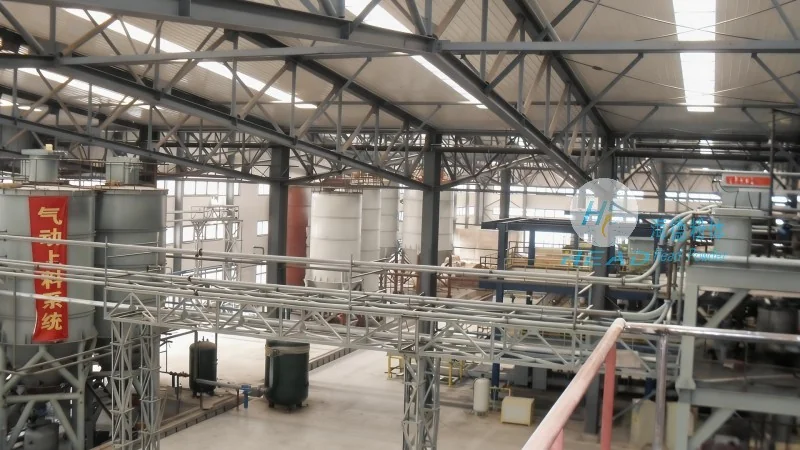
Overview of Sintered Dust Gas-Solid Conveying Equipment
Sintered dust gas-solid conveying equipment is a specialized system designed to transport sintered dust from one location to another using a gas stream. The primary purpose is to replace traditional methods like bucket elevators or belt conveyors, which may suffer from issues such as material blockage, wear and tear, and environmental pollution. The equipment operates by injecting air or other gases into a pipeline, creating a flow that carries the dust particles through the system. This approach not only enhances material handling efficiency but also contributes to better environmental control by minimizing dust emissions during transport.
Key Components and Working Principle
The sintered dust gas-solid conveying equipment typically consists of several core components, each playing a vital role in the overall operation. The main parts include a dust feeder, a gas compressor or blower, a conveying pipeline, and a discharge unit. The dust feeder is responsible for feeding the sintered dust into the pipeline at a controlled rate. The gas compressor or blower supplies the necessary air or gas pressure to generate the conveying flow. The conveying pipeline transports the dust particles, while the discharge unit collects the material at the destination point.
The working principle involves the creation of a high-velocity gas stream within the pipeline. As the gas flows, it entrains the dust particles, forming a suspension that moves through the system. The velocity of the gas must be sufficient to overcome the gravitational forces acting on the particles and to maintain the suspension without causing excessive wear on the pipeline or equipment components. This principle is often referred to as pneumatic conveying, where the gas acts as the medium for transporting the solid material.

Design Principles and Considerations
The design of sintered dust gas-solid conveying equipment involves several critical principles to ensure optimal performance, reliability, and efficiency. One of the primary design considerations is the selection of appropriate gas velocity. The velocity must be high enough to prevent particle deposition and blockage but low enough to minimize wear on the pipeline and reduce energy consumption. Engineers often use empirical formulas or computational fluid dynamics (CFD) simulations to determine the optimal gas velocity for a given dust type and particle size distribution.
Another important design principle is the selection of the conveying pipeline material. Sintered dust can be abrasive, and the pipeline must be made of materials that can withstand the wear and corrosion caused by the material. Common materials include stainless steel, polyethylene, or specialized coatings. The pipeline diameter and length also play a role in the design, as they affect the pressure drop and energy requirements of the system. Proper sizing of the pipeline ensures that the gas flow remains stable and that the conveying efficiency is maximized.
Control systems are also a critical part of the design, as they regulate the feed rate of the dust and the pressure of the gas. Advanced control systems can adjust the parameters in real-time based on process conditions, ensuring consistent performance and preventing issues such as overloading or under-conveying. Safety considerations are also integral to the design, including the inclusion of pressure relief valves and dust collection systems to prevent the buildup of dust in the pipeline and to protect personnel from exposure to airborne particles.

Application and Benefits
Sintered dust gas-solid conveying equipment is widely used in the iron and steel industry, as well as in other sectors where sintered dust is generated. The equipment is particularly beneficial in applications where long-distance transport or vertical lifting of the material is required. Compared to traditional methods, gas-solid conveying offers several advantages, including lower maintenance costs, reduced environmental impact, and improved safety. The system is also more flexible, as it can be easily adjusted to handle different dust types or particle sizes.
The equipment is manufactured by Shandong HeadPowder Engineering Co., Ltd., a company based in China. HeadPowder specializes in the design and production of industrial conveying equipment, with a focus on providing customized solutions for various material handling needs. The company's products are known for their durability, efficiency, and reliability, making them a trusted choice for industries that require high-performance material transport systems.
With its headquarters in Shandong, China, HeadPowder leverages advanced technology and engineering expertise to develop innovative solutions for the material handling industry. The company's commitment to quality and customer satisfaction has earned it a reputation as a leading provider of sintered dust gas-solid conveying equipment. By combining traditional knowledge with modern technology, HeadPowder continues to improve its products, ensuring that they meet the evolving needs of industrial applications.