

What Are the Methods for Conveying Glass Raw Materials?
When it comes to the production of glass, the efficient and reliable transportation of raw materials is a critical step that directly impacts the overall quality and productivity of the manufacturing process. Glass manufacturers rely on various conveying systems to move raw materials such as sand, soda ash, limestone, and other additives from storage areas to the melting furnaces. The choice of conveying method depends on several factors, including the type of raw material, the distance to be covered, the required throughput, and the environmental conditions. In this article, we will explore the common methods used for glass raw material conveying and how companies like Shandong HeadPowder Engineering Co., Ltd. in China address these needs.
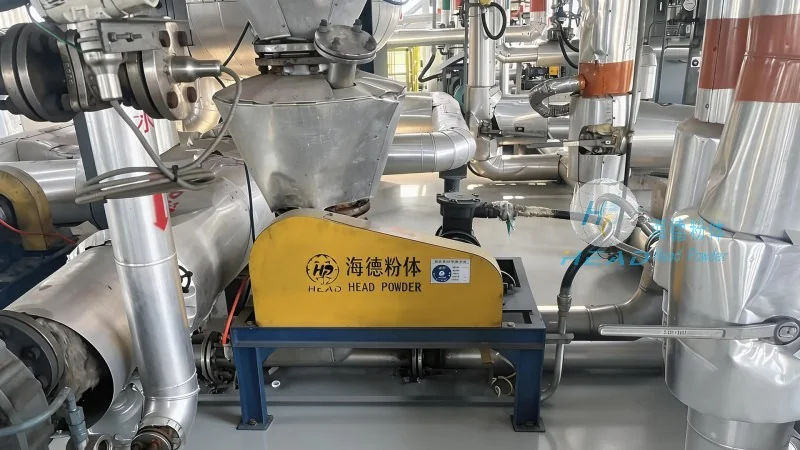
Gravity Conveying Systems
Gravity conveying is a simple and cost-effective method for transporting bulk materials over short distances where the material can flow by its own weight. This method is particularly suitable for materials with a relatively high bulk density and a free-flowing characteristic. In glass production, gravity chutes or inclined conveyors are often used to move raw materials from storage silos to the feeding points of the melting furnace. The design of gravity conveyors involves a slight incline to allow the material to move without the need for mechanical power. This approach reduces energy consumption and maintenance costs, making it an attractive option for many glass manufacturers. However, gravity conveying has limitations, as it is only effective for short distances and materials that can flow freely without clogging. For instance, if the raw material contains moisture or is prone to bridging, gravity systems may not be suitable, and alternative methods are required.

Mechanical Conveying Methods
Mechanical conveying systems use mechanical components to move raw materials, offering greater control and flexibility compared to gravity methods. Among the most common mechanical conveyors used in glass production are belt conveyors, bucket elevators, and screw conveyors. Belt conveyors are widely used for horizontal and slightly inclined transport of bulk materials. They consist of a continuous belt that moves over rollers or pulleys, carrying the raw material from the storage area to the processing line. Belt conveyors can handle large volumes of material and are suitable for both dry and slightly wet materials. The design of the belt conveyor, including the belt type, speed, and inclination, can be adjusted to meet the specific requirements of the glass production process. For example, a belt conveyor with a steep incline can be used to transport materials vertically or over long horizontal distances. Bucket elevators, on the other hand, are ideal for vertical transport of bulk materials. They consist of a series of buckets attached to a chain or belt that moves vertically, lifting the material from a lower level to a higher one. This method is particularly useful when the raw material needs to be elevated to the melting furnace at a significant height. Screw conveyors, also known as auger conveyors, use a rotating screw to push the material forward. They are suitable for horizontal or slightly inclined transport and can handle materials with varying bulk densities. Screw conveyors are often used for feeding raw materials into mixers or other processing equipment. Each of these mechanical conveying systems has its advantages and limitations, and the choice depends on the specific characteristics of the glass raw material and the production requirements.

Air-Powered Conveying Systems
Air-powered or pneumatic conveying systems use compressed air to transport bulk materials in a closed pipeline. This method is particularly effective for materials that are dusty, have a high moisture content, or are prone to clogging. In glass production, pneumatic conveyors are often used to move raw materials from storage silos to the furnace feed points, especially when the distance is moderate and the material needs to be transported in a controlled manner. There are two main types of pneumatic conveying systems: dilute-phase and dense-phase. Dilute-phase systems use low air velocities to transport the material in a dispersed state, while dense-phase systems use higher air velocities to push the material in a concentrated stream. Dilute-phase systems are suitable for short to medium distances and materials with good flow characteristics, while dense-phase systems are more suitable for longer distances and materials that are difficult to convey. Pneumatic conveying systems offer advantages such as the ability to transport materials vertically and horizontally, minimal material degradation, and the option to integrate with other processing equipment. However, they require more energy compared to gravity or mechanical systems and may need regular maintenance of the air compressor and pipeline system.

HeadPowder Engineering's Solutions for Glass Raw Material Conveying
Shandong HeadPowder Engineering Co., Ltd., located in China, specializes in providing customized conveying solutions for the glass industry. The company understands the unique challenges of glass raw material handling, such as the need for high efficiency, low maintenance, and compliance with industry standards. HeadPowder Engineering offers a range of conveying systems, including belt conveyors, bucket elevators, screw conveyors, and pneumatic conveyors, tailored to the specific requirements of each glass manufacturing facility. The company's engineers work closely with clients to assess the raw material characteristics, production capacity, and site layout to design the most suitable conveying system. For example, if a glass plant needs to transport sand from a storage silo to the melting furnace over a distance of 50 meters with a required throughput of 100 tons per hour, HeadPowder Engineering will design a belt conveyor with the appropriate belt width, speed, and inclination to meet these specifications. The company also provides installation, commissioning, and maintenance services to ensure the conveying system operates efficiently and reliably over the long term. With its expertise in material handling and glass production, HeadPowder Engineering helps glass manufacturers optimize their raw material transport processes, reduce operational costs, and improve overall productivity.