

Introduction to the Monosodium Glutamate Powder Conveying System: Structure and Working Principle
Shandong HeadPowder Engineering Co., Ltd. specializes in the design, manufacturing, and supply of advanced powder conveying systems tailored for the food and chemical industries. HeadPowder, as a leading enterprise in this field, has established itself as a reliable partner for businesses requiring efficient and reliable solutions for handling bulk powders. This article provides an overview of the Monosodium Glutamate (MSG) powder conveying system, detailing its structural design and operational principles.

Company Profile and Background
HeadPowder Engineering Co., Ltd. is headquartered in Shandong, China. The company focuses on developing innovative powder handling technologies that meet the stringent requirements of modern industrial applications. With years of experience in the industry, HeadPowder has built a reputation for delivering high-quality, durable, and efficient conveying systems that enhance productivity and ensure product integrity. The company's commitment to research and development ensures that its products remain at the forefront of technological advancements in powder processing.
Overview of the Monosodium Glutamate Powder Conveying System
The Monosodium Glutamate (MSG) powder conveying system is engineered to handle the unique challenges associated with transporting MSG powder, such as its hygroscopic nature and the need for precise control over particle flow. This system is designed to ensure minimal product degradation, maintain consistent moisture levels, and prevent contamination during the conveying process. It integrates various components that work in harmony to achieve efficient and reliable powder transfer from storage to processing units.

Structural Design and Working Principle
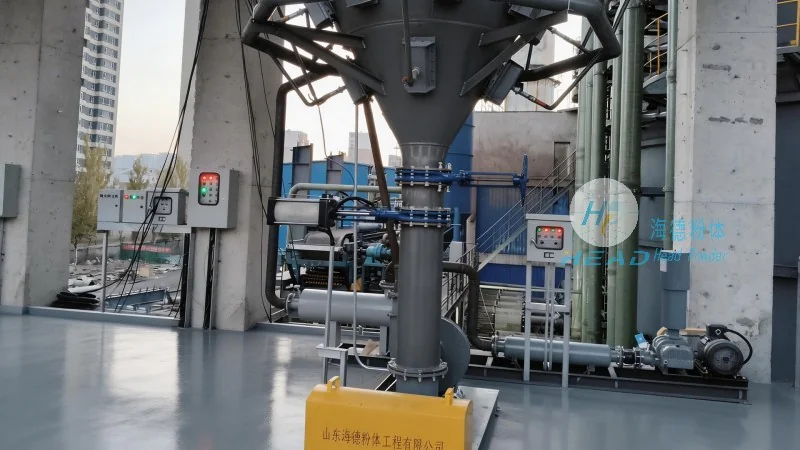
The system's structure comprises several key components, including a hopper, a rotary valve, a conveyor pipe, and a control unit. The hopper serves as the storage container, allowing for the accumulation of MSG powder before it is transferred. The rotary valve acts as a gate, controlling the flow of powder from the hopper into the conveyor pipe. The conveyor pipe, typically made of stainless steel or other corrosion-resistant materials, transports the powder through a series of bends and straight sections. The control unit manages the operation of the rotary valve and the speed of the conveyor, ensuring smooth and controlled movement of the powder. The working principle involves the rotation of the rotary valve, which opens and closes to allow powder to enter the conveyor pipe. As the pipe rotates or moves, the powder is propelled forward, reaching the desired destination. This mechanism minimizes product breakage and maintains the integrity of the MSG powder.
Technical Features and Advantages
The Monosodium Glutamate powder conveying system from HeadPowder is equipped with several technical features that enhance its performance and reliability. These include a stainless steel construction, which provides resistance to corrosion and ensures hygiene compliance in food processing applications. The system is also designed with a low maintenance requirement, featuring easy-to-clean components that simplify routine maintenance. Additionally, the control unit offers adjustable speed settings, allowing for precise control over the conveying rate. The system's ability to handle hygroscopic materials without moisture absorption or product clumping is a significant advantage, as it maintains the quality of the MSG powder throughout the process. The compact design of the system also contributes to space efficiency, making it suitable for installations in various industrial settings.

Application and Operational Benefits
The MSG powder conveying system is widely used in food processing plants, particularly in the production of monosodium glutamate. Its primary application is the efficient transfer of MSG powder from storage silos to mixing and packaging lines. The system's ability to maintain consistent flow rates and prevent product degradation ensures that the final product meets quality standards. Operational benefits include increased productivity due to reduced downtime and lower maintenance costs. The system's design also minimizes the risk of product contamination, which is crucial in food processing environments. Furthermore, the system's energy efficiency contributes to lower operational costs, making it a cost-effective solution for businesses in the food industry.
Conclusion
Shandong HeadPowder Engineering Co., Ltd.'s Monosodium Glutamate powder conveying system represents a sophisticated solution for the efficient handling of MSG powder. With its robust structural design and advanced operational principles, the system addresses the specific challenges associated with transporting hygroscopic and sensitive powders. HeadPowder's commitment to quality and innovation ensures that this system meets the highest standards of performance and reliability, making it an ideal choice for businesses seeking to enhance their powder handling processes. By leveraging this technology, companies can improve productivity, maintain product quality, and reduce operational costs, ultimately contributing to their overall success in the competitive food and chemical industries.