

Operation Process and Working Principle of Husk Material Conveying Lines
HeadPowder, a leading manufacturer based in Shandong, China, specializes in the design, production, and installation of advanced husk material conveying systems. This article provides a detailed overview of the operation process and working principles of our husk material conveying lines, highlighting the key components, operational procedures, and technical advantages that ensure efficient and reliable material handling in various industrial applications.

Introduction to Husk Material Conveying Lines
Husk material conveying lines are critical equipment in industries such as agriculture, food processing, and biomass energy production. These systems are engineered to transport husk materials—such as rice husk, wheat husk, and other agricultural byproducts—from collection points to processing or storage facilities. The design of these lines is tailored to handle the unique properties of husk materials, including their lightweight, abrasive nature, and tendency to create dust. By integrating advanced technology and robust construction, our conveying lines ensure optimal performance while minimizing operational costs and environmental impact.
Key Components of the Conveying Line System
The husk material conveying line typically consists of several interconnected components, each playing a vital role in the overall operation. The primary components include:
- Feeding Hopper: A hopper is used to collect and store the raw husk material. It is designed with a sloped bottom to facilitate smooth material flow into the conveyor. The hopper is often equipped with a vibration or agitation system to prevent material bridging and ensure consistent feeding.
- Conveyor Belt or Screw Conveyor: The core of the conveying system, this component transports the husk material from the hopper to the processing or storage area. Conveyor belts are commonly used for horizontal or slightly inclined transport, while screw conveyors are ideal for vertical or steep incline applications. The choice of conveyor type depends on the material characteristics, distance to be covered, and required throughput.
- Pulley or Drive System: This component provides the mechanical power to move the conveyor belt or screw. It includes motors, gearboxes, and pulleys that ensure consistent and controlled movement of the material. The drive system is designed to handle the high torque and low speed requirements typical of husk material transport.
- Control Panel: An integrated control panel allows operators to monitor and adjust the conveying line's performance. It includes sensors for detecting material levels, speed controls, and safety interlocks to prevent accidents. The control panel is user-friendly and can be customized to meet specific operational needs.
- Dust Collection and Filtration System: Due to the dusty nature of husk materials, a dust collection system is essential to maintain air quality and protect equipment. This system typically includes a fan, filter bags, and a collection bin. It captures dust particles during the conveying process and filters them before releasing clean air back into the environment.
Operation Process of the Husk Material Conveying Line
The operation of the husk material conveying line follows a systematic sequence to ensure efficient material transport. The process begins with the loading of raw husk material into the feeding hopper. As the material accumulates, the hopper's agitation system or vibration mechanism ensures a steady flow into the conveyor. The conveyor belt or screw then transports the material to the desired destination, such as a storage silo or processing unit. Throughout the process, the control panel monitors key parameters, including material level, conveyor speed, and dust levels. Operators can adjust these parameters in real-time to optimize performance and prevent overloading or underloading of the system.

During operation, the dust collection system continuously captures any airborne particles, preventing dust accumulation in the hopper or conveyor. This not only improves air quality but also protects the equipment from abrasive wear caused by dust. The system is designed to operate continuously, with minimal downtime for maintenance or cleaning. Regular maintenance, such as belt tension checks and filter replacements, is recommended to ensure long-term reliability.
Working Principle of the Conveying Line
The working principle of the husk material conveying line is based on mechanical energy transfer and material handling technology. The system utilizes a combination of gravity, friction, and mechanical force to move the husk material through the conveyor. The feeding hopper provides the initial material supply, and the conveyor belt or screw applies the necessary force to transport the material. The pulley and drive system converts electrical energy into mechanical energy, ensuring consistent movement. The control panel integrates sensors and feedback mechanisms to regulate the system's performance, maintaining optimal conditions for material transport.
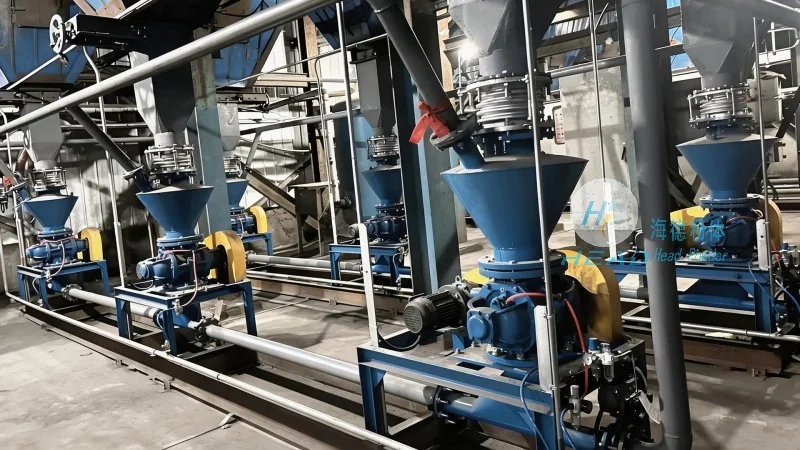
Key to the system's efficiency is the design of the conveyor components. The belt or screw is engineered to minimize friction and wear, reducing energy consumption and extending the equipment's lifespan. The hopper's design prevents material bridging, ensuring a consistent flow rate. The dust collection system works in tandem with the conveyor to maintain a clean and safe operating environment. By integrating these components, the husk material conveying line operates as a cohesive system, delivering reliable and efficient material transport for various industrial applications.
Technical Advantages and Applications
Our husk material conveying lines offer several technical advantages that make them ideal for industrial use. These include high throughput capacity, low energy consumption, and minimal maintenance requirements. The systems are designed to handle a wide range of husk materials, from light to heavy, and can be customized to meet specific operational needs. Applications include biomass power plants, agricultural processing facilities, and waste management systems, where efficient material transport is critical to overall productivity.
In conclusion, the operation process and working principles of husk material conveying lines are designed to provide reliable and efficient material handling. By integrating advanced components and control systems, our conveying lines ensure optimal performance while minimizing operational costs and environmental impact. As a leading manufacturer based in Shandong, China, HeadPowder continues to innovate and improve our products to meet the evolving needs of the industry.