

Working Principle and Features of Graphite Lump Pneumatic Conveying Systems
Graphite lump pneumatic conveying systems are specialized equipment designed to transport graphite lumps efficiently and safely. These systems utilize air as the medium to move the material from the source to the destination, offering a non-contact, dust-free, and continuous conveying solution. The technology is widely adopted in industries dealing with graphite processing, such as battery manufacturing, refractory production, and chemical processing, due to its ability to handle abrasive materials like graphite lumps without causing wear or contamination. The systems are engineered to maintain the integrity of the graphite product, ensuring that the material remains free from impurities and in optimal condition for downstream applications.

Working Principle of Graphite Lump Pneumatic Conveying Lines
The core of a graphite lump pneumatic conveying line is the air flow that propels the material through a network of pipes. The system typically operates on either suction or pressure principles. In suction systems, a vacuum is created at the material loading point, drawing the graphite lumps into the pipeline. The air then carries the material to the discharge point, where a separator or cyclone separates the material from the air stream. For pressure systems, compressed air is introduced at the discharge end, pushing the material through the pipes. The choice between suction and pressure depends on factors like the distance, elevation changes, and material characteristics. The system includes key components such as a material feeder, a conveying pipeline, a fan or blower, a separator, and a discharge device. The material feeder ensures a consistent flow of graphite lumps into the system, while the fan provides the necessary air pressure or vacuum. The separator is crucial for separating the graphite from the air, preventing dust accumulation and ensuring the material is delivered in a clean state. The discharge device controls the release of the material at the receiving end, maintaining the integrity of the graphite product. The fan or blower is a critical component, as it must generate sufficient air flow to move the graphite lumps without causing excessive pressure drops or energy consumption. The design of the fan is tailored to the specific requirements of the system, considering factors like the material density, pipe diameter, and conveying distance.

Key Features of Graphite Lump Pneumatic Conveying Systems
Graphite lump pneumatic conveying systems offer several advantages that make them ideal for handling graphite materials. Firstly, they provide a dust-free conveying environment, which is critical for maintaining the quality of graphite products, especially in applications like battery anodes where purity is paramount. The non-contact nature of the system prevents contamination from external sources, ensuring the graphite lumps remain clean and free from impurities. Secondly, these systems offer high efficiency and reliability. They can operate continuously with minimal downtime, as the components are designed to handle the abrasive properties of graphite without frequent maintenance. The continuous flow of material reduces labor costs and increases productivity in graphite processing plants. Thirdly, the systems are flexible and can be adapted to various layouts and distances. They can handle both short and long conveying distances, as well as changes in elevation, making them suitable for different plant configurations. Additionally, the systems are compact and can be integrated into existing production lines, minimizing the need for additional space. The use of air as the conveying medium also reduces the risk of material degradation, as the graphite lumps are not subjected to mechanical stress during transport. Finally, the systems are environmentally friendly, as they do not require water or other liquids for operation, and the air can be filtered and recycled, reducing waste and energy consumption. The separation process is also efficient, with the separator capturing over 99% of the graphite particles, ensuring minimal loss and optimal material recovery.
Application Scenarios and Benefits
Graphite lump pneumatic conveying systems are widely used in various applications within the graphite industry. In battery manufacturing, these systems are essential for transporting graphite lumps from storage to processing facilities, ensuring a consistent supply of raw material for electrode production. The systems help maintain the quality of the graphite by preventing contamination and ensuring a uniform flow of material. In refractory production, the systems are used to move graphite lumps from grinding and mixing stations to the molding or sintering processes. The efficiency of the system reduces the time required for material transport, improving the overall production cycle. In chemical processing, the systems are used to convey graphite lumps to reactors or mixing tanks, where they are used as a raw material in the production of graphite-based chemicals. The benefits of these systems, such as dust-free operation and high efficiency, contribute to improved product quality and reduced operational costs. The systems are also suitable for handling other abrasive materials, making them versatile in different industrial applications. The use of pneumatic conveying technology by Shandong HeadPowder Engineering Co., Ltd. has been instrumental in enhancing the productivity and quality of graphite processing operations in China, as evidenced by their expertise in designing and manufacturing these systems for various industrial needs.
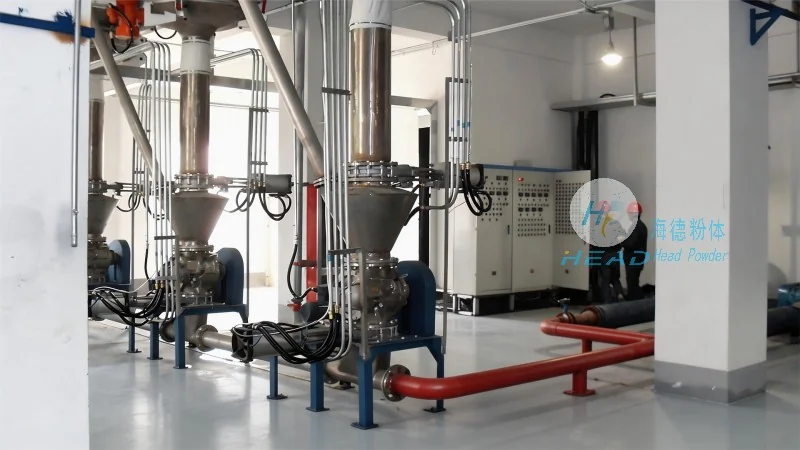
Conclusion and Company Overview
Graphite lump pneumatic conveying systems represent a sophisticated solution for the efficient and safe handling of graphite materials. By leveraging air as the conveying medium, these systems offer numerous advantages over traditional mechanical conveying methods, including reduced contamination, increased efficiency, and environmental friendliness. The working principle, which involves the use of suction or pressure to move material through a pipeline, is complemented by key features such as dust-free operation and high reliability. These features make the systems suitable for a wide range of applications in the graphite industry, from battery manufacturing to refractory production. Shandong HeadPowder Engineering Co., Ltd., based in Shandong, China, specializes in the design, manufacturing, and installation of such systems, providing tailored solutions to meet the specific needs of their clients. The company's expertise in handling abrasive materials like graphite lumps has made them a trusted partner in the industry, contributing to the advancement of graphite processing technologies and the overall productivity of their clients' operations.