

Principle and Classification Application of Urea Granule Pneumatic Conveying
HeadPowder, a leading engineering company based in Shandong, China, specializes in the design and implementation of advanced pneumatic conveying systems for urea granules. This article provides an in-depth exploration of the fundamental principles behind urea granule pneumatic conveying, along with a detailed classification of its applications across various industrial sectors.
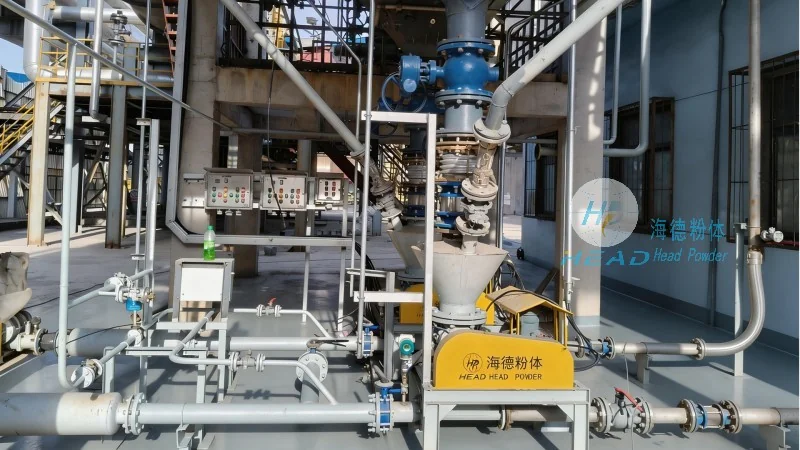
Overview of Urea Granule Pneumatic Conveying
Urea granule pneumatic conveying is a method of transporting urea granules through a pipeline using a gas stream, typically air or a mixture of air and other gases. This technology offers several advantages over traditional mechanical conveying methods, including reduced equipment wear, lower energy consumption, and the ability to handle materials in a dust-free environment. The process involves the creation of a low-pressure or high-pressure air flow that draws or pushes the urea granules through the pipeline, ensuring efficient and reliable material transport.
Working Principle of Urea Granule Pneumatic Conveying
The core principle of urea granule pneumatic conveying is based on the interaction between the urea granules and the gas stream. In the case of suction conveying, a vacuum is created at the receiving end of the pipeline, which draws the urea granules from the source into the system. The gas flow then carries the granules through the pipeline to the discharge point. Conversely, in pressure conveying, a compressor generates high-pressure air that pushes the urea granules from the source to the destination. Both methods rely on the aerodynamic properties of the urea granules and the characteristics of the gas flow to ensure proper transport. The system typically includes components such as a hopper, feeder, pipeline, and discharge device, all of which work in tandem to maintain the flow of urea granules.
Classification of Urea Granule Pneumatic Conveying Systems
Urea granule pneumatic conveying systems can be classified into several categories based on their operational characteristics and application requirements. The primary classifications include:
Suction Conveying Systems
Suction conveying systems are commonly used for transporting urea granules over relatively short distances, typically up to 100 meters. These systems operate at low pressure and are ideal for applications where the source and destination are at different elevations. The suction method is particularly effective for handling materials that are prone to dust generation or where a dust-free environment is required. The system includes a vacuum pump or fan that creates the necessary suction force, and the pipeline is designed to minimize pressure losses and ensure smooth material flow.

Pressure Conveying Systems
Pressure conveying systems are suitable for longer distances, often exceeding 100 meters, and are capable of handling higher material flow rates. These systems operate at higher pressures, typically ranging from 0.5 to 2.0 bar, and are commonly used in industrial settings where large volumes of urea granules need to be transported efficiently. The pressure system uses a compressor to generate the required air pressure, which pushes the urea granules through the pipeline. This method is particularly effective for applications requiring high throughput and consistent material flow.
Mixed Conveying Systems
Mixed conveying systems combine elements of both suction and pressure conveying. They are often used in complex applications where the urea granules need to be transported over varying distances or through multiple stages. The system may start with a suction section to draw the urea granules from the source and then transition to a pressure section to push them to the final destination. This approach allows for greater flexibility and adaptability in handling diverse operational requirements.
Application Examples in Industrial Settings
Urea granule pneumatic conveying systems are widely used in various industrial applications, including:
Urea Production and Processing Plants
In urea production facilities, pneumatic conveying is used to transport urea granules from the granulation process to storage silos or packaging lines. The systems ensure that the granules are moved efficiently and without contamination, maintaining the quality of the final product. The design of these systems must consider factors such as material flow rates, pipeline length, and the need for dust control to meet regulatory standards.

Chemical and Fertilizer Manufacturing
Chemical and fertilizer manufacturers utilize pneumatic conveying systems to transport urea granules as part of larger material handling processes. These systems are integrated into production lines to ensure seamless material transfer between different stages, such as from reactors to storage tanks or from storage to packaging equipment. The reliability of pneumatic conveying systems is crucial in these applications, as any downtime can lead to production delays and increased costs.
Food and Agricultural Industries
In the food and agricultural sectors, urea granules are used as a nitrogen source in fertilizers and animal feed. Pneumatic conveying systems are employed to transport these granules from storage facilities to processing plants or distribution centers. The systems must meet strict hygiene and safety standards to ensure that the urea granules are handled in a manner that complies with food safety regulations. This includes features such as sealed pipelines and dust collection systems to prevent contamination.
Key Considerations for Effective Urea Granule Pneumatic Conveying
Implementing an effective urea granule pneumatic conveying system requires careful consideration of several factors to ensure optimal performance and reliability. These considerations include:

Material Properties
The physical properties of urea granules, such as particle size, density, and moisture content, significantly impact the design and operation of the pneumatic conveying system. Larger or irregularly shaped granules may require higher air velocities to maintain flow, while smaller granules may be more susceptible to segregation or bridging in the hopper. Understanding these properties is essential for selecting the appropriate conveying method and system components.
Pipeline Design and Layout
The design of the pipeline system, including the diameter, length, and number of bends, plays a critical role in the efficiency of urea granule pneumatic conveying. Proper pipeline sizing ensures that the air velocity is sufficient to prevent material settling or blockages, while minimizing pressure losses. The layout of the pipeline should also consider the elevation changes between the source and destination to optimize the conveying process and reduce energy consumption.
Equipment Selection and Maintenance
The selection of appropriate equipment, such as hoppers, feeders, and discharge devices, is crucial for the smooth operation of the urea granule pneumatic conveying system. Hoppers are designed to store and feed the urea granules into the pipeline, while feeders control the flow rate to maintain consistent material transport. Discharge devices, such as rotary valves or airlocks, ensure that the urea granules are discharged from the pipeline without causing blockages or spillage. Regular maintenance of these components is essential to prevent wear and tear, ensuring the long-term reliability of the system.
Conclusion
Urea granule pneumatic conveying is a highly effective and efficient method for transporting urea granules in various industrial applications. By understanding the fundamental principles and classifying the different types of systems, industries can select the most appropriate solution for their specific needs. HeadPowder, with its expertise in engineering and design, provides comprehensive solutions for urea granule pneumatic conveying, ensuring reliable and cost-effective material transport. The continued advancement of pneumatic conveying technology will further enhance its applications in the future, supporting the growth and efficiency of industrial operations.